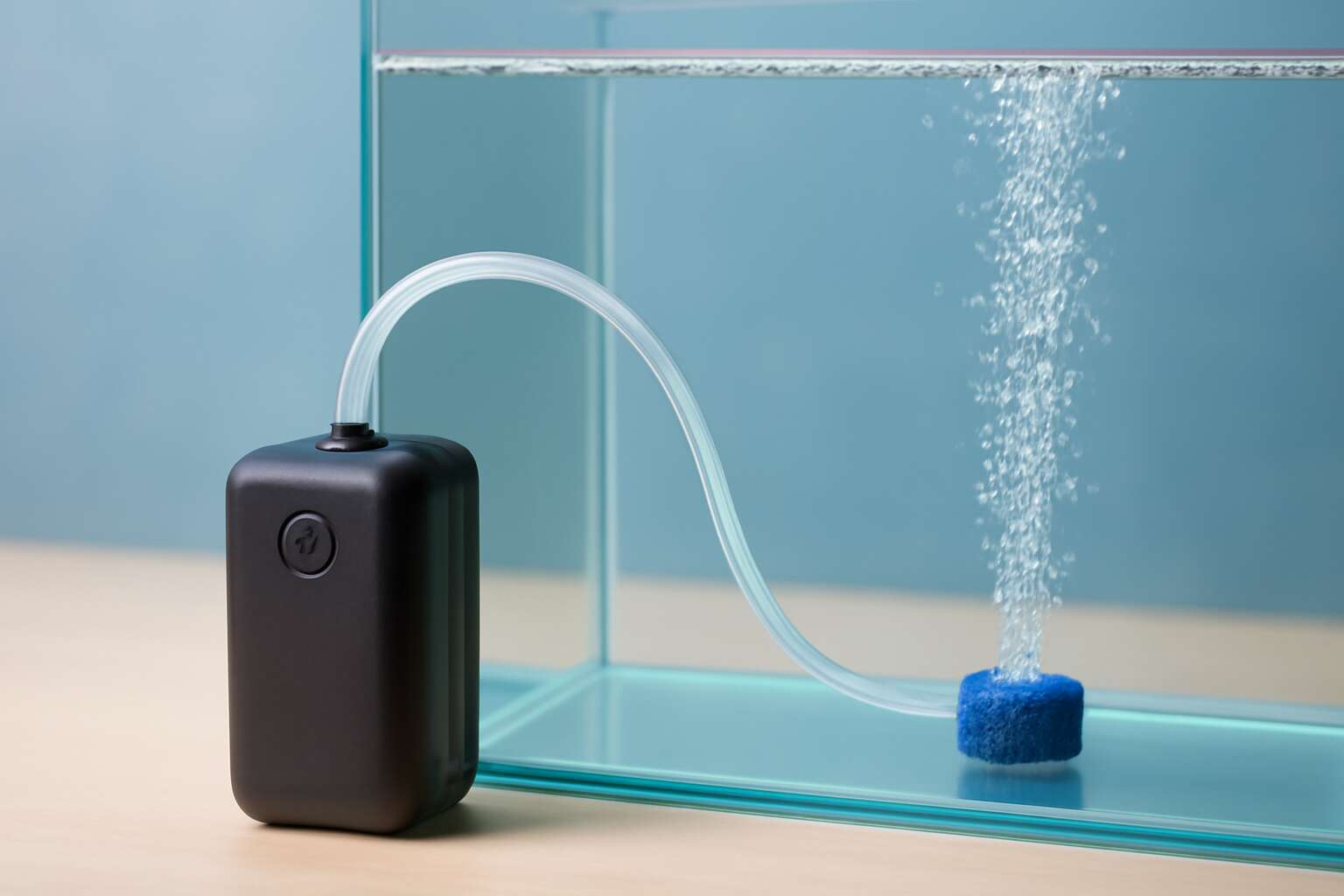
Understanding Battery-Powered Air Pump Backups
What the backup air-pump setup is – Overview of components and operation
Power outages haunt many corners of South Africa, with a notable 40% of small-scale operations facing at least one outage annually. A battery backup air pump steps in as a lifeline, keeping aquaculture and hydroponics oxygenated when the grid shutters. It is a compact system that stores energy, runs a pump, and switches seamlessly when mains fail, so life persists without drama.
- Rechargeable battery pack (lithium or lead‑acid)
- Air pump (quiet, dependable)
- Charge controller or regulator
- Inverter (for AC pumps) or direct DC wiring
- Automatic switch or relay for seamless transfer
During operation, the battery powers the pump through the chosen pathway, supplying steady aeration to water and air spaces. When power returns, the system recharges and awaits the next cycle. The beauty lies in its simplicity: a reliable backbone that keeps vital processes alive, even when the lights dim. A well-matched battery backup air pump blends practical engineering with peace of mind.
Key benefits for continuity and safety – Reliability, unattended operation, and safety implications
Across South Africa, a single outage can shutter operations overnight—unless a battery backup air pump stands guard. This compact lifeline keeps essential water aeration flowing when the grid falters, turning a looming blackout into a controllable blip.
Reliability is the first virtue. The system maintains steady oxygenation even if the mains vanishes mid-shift. Unattended operation follows naturally, letting you focus on other tasks while the pump hums away. For safety, consistent aeration reduces stress on stock and safeguards water quality during outages.
- Reliability under grid instability
- Unattended operation with safety safeguards
In practice, a well-chosen backup delivers continuity and safety in equal measure, a quiet guardian that keeps life in the water moving when the lights go out.
Common use cases and environments – Home, healthcare, aquaculture, and industrial settings
When the grid falters, every breath becomes a question—will the pond, tank, or farm keep its life-supporting aeration intact? A battery backup air pump answers with quiet resolve, a compact lifeline that keeps oxygen moving and worries in check.
Common use cases span homes, healthcare facilities, aquaculture, and industrial settings. In a residential pond or hydroponic setup, it guards tiny ecosystems during outages. In healthcare, auxiliary aeration supports patient-centered environments where continuity matters. In aquaculture, fish ponds depend on steady oxygen to prevent stress and losses. Industrial plants rely on reliable aeration in wastewater treatment and fermentation lines, maintaining process stability even when power fails. In South Africa too, outages spike during load shedding, making resilience essential.
Key environments include:
- Residential ponds and water features
- Clinical facilities requiring uninterrupted aeration
- Aquaculture fish ponds and hatcheries
- Industrial wastewater treatment and process water systems
Sizing and Capacity for Reliable Air Pump Backup
How to calculate required runtime – Estimating runtime under typical loads
Power outages haunt rural life, and a single interruption can stall a hatchery, a fish pond, or a workshop. A well-sized battery backup air pump means air keeps moving when the grid falters and daily routines stay intact.
To size it, start with the pump’s draw: note its watts or amps, then pick a battery with enough Ah to cover the hours you need. Runtime ≈ (Ah × V) / current. Example: a 100 Ah battery at 12 V yields about 100×12/2 = 600 minutes (10 hours) with a 2 A draw.
Consider these factors:
- Load profile and desired runtime
- Battery chemistry, capacity, and temperature effects
- Inverter efficiency and aging losses
With careful sizing, this battery backup air pump provides a steady heartbeat through storms and load-shedding across South Africa, helping farms, homes, and small businesses keep air flowing and spirits high.
Important capacity metrics (Ah, Wh, C-rating) – Understanding battery capacity and performance
Power swings hit rural South Africa with stubborn regularity, turning routine into a stutter of outages. A battery backup air pump keeps the breath of life moving when the grid falters, and smart sizing rests on three metrics: Ah, Wh, and C-rating—each revealing a different facet of capacity and performance.
- Ah (ampere-hours): reservoir of charge at a fixed voltage, guiding runtime for your pump.
- Wh (watt-hours): energy content; Wh = voltage × Ah, useful for comparing different battery chemistries.
- C-rating: discharge speed; higher C-rated packs deliver current more quickly, at some cost to life.
When these numbers align with your load—pond aeration, hatchery cycles, or workshop air demand—you gain dependable, silent power through storms. I picture the calm after a blackout: water ripples, bubbles unfazed, and work continuing as if nothing happened.
Choosing a battery type for runtime vs weight – Trade-offs between chemistry, weight, and cost
Sizing a battery backup air pump isn’t just math; it’s a quiet negotiation with the weather. In rural South Africa, outages arrive with stubborn regularity, and every minute of continuous aeration matters for ponds and hatcheries. Runtime and weight tug at the decision, as heavier packs require sturdier mounting and higher budgets. The best choice honors balance—capacity, portability, and price—so the breath of life stays steady through the storm.
Consider these chemistry profiles:
- Lead-acid: inexpensive upfront, heavy but rugged for static installs
- Li-ion: lighter and compact, higher energy density, pricier
- LiFePO4: long cycle life, stable, good safety, moderate cost
Which path fits your setting depends on climate, space, and budget. In many rural SA sites, a balanced mix of safety, lifecycle, and weight wins the race, ensuring the air pump remains poised without breaking the bank.
Estimating surge and idle current – Accounting for startup spikes and idle consumption
Power events in rural SA arrive with a stubborn rhythm—outages are common, and every second of aeration matters for ponds and hatcheries. Sizing a battery backup air pump isn’t pure math; it’s a weather negotiation, balancing reliability with space and load. Plan for startup spikes and idle draw.
Startup currents can dwarf running draw, and the datasheet tells the surge story. Startup current versus continuous current maps the demand. A buffer of 1.5 to 2 times the expected runtime under peak load helps the system breathe.
- Startup current vs running current
- Duty cycle and aeration needs
- Temperature and supply voltage
Capacity math across climates reveals how energy stores breathe under pressure. The battery backup air pump becomes a silent partner, translating capacity into breath. Temperature, aging, and cycling redraw the line between performance and fatigue.
Battery Types and Technology
Lead-acid vs lithium options – Pros, cons, and suitability for backups
“Power outages are the new norm,” a regional engineer warns, and that reshapes how we think about backup power! For a battery backup air pump, reliability is a lifeline across South Africa’s homes, clinics, and aquaculture.
Lead-acid batteries stay inexpensive upfront and work reliably in simple setups, but they’re heavy and heat-sensitive. They excel for short runtimes where space isn’t a premium, with straightforward charging and maintenance.
- Lead-acid: cheap upfront, simple charging
- Drawbacks: heavy, shorter cycle life in heat
- Best use: short-duration backups with modest space
Lithium chemistries deliver higher energy density, lighter weight, and longer life—great for longer runtimes and compact installs. They demand a proper BMS and thermal management, and the upfront cost is higher, especially in warm climates. For this setup, lithium often provides steadier performance when outages stretch longer.
Lithium iron phosphate (LiFePO4) advantages – Long life, safety, and performance reasons
“Power outages are the new norm,” a regional engineer warns, and that reshapes how we think about backup power. LiFePO4 cells bring long life, strong safety, and steady performance for a battery backup air pump. In SA’s warm climate, this chemistry shines.
- Long cycle life: thousands of charge-discharge cycles with minimal capacity loss
- Enhanced safety: thermal stability reduces overheating risk
- Consistent performance in heat: stable voltage across varying temperatures
- Lightweight and compact: more runtime per kilogram
In practice, LiFePO4 maintains steady operation under heat and extended draws, aligning with the needs of a reliable aeration setup.
Battery life, cycle life, and charging considerations – Cycle counts, depth of discharge, and charging
Power reliability has a new baseline in South Africa’s climate, and battery life is the assassin that keeps the lights on. When choosing a battery backup air pump, the cycle life and how the chemistry handles deep draws shape long-term performance. The right pack delivers predictable bursts when outages strike.
- Cycle life: thousands of cycles with minimal capacity fade
- Depth of discharge (DoD): higher DoD reduces cycles; managed by design
- Charging considerations: temperature, C-rate, and storage impact
Cycle counts, depth of discharge, and charging characteristics translate into real-world uptime, especially when the power grid wobbles. The best matches readers find a balance between weight, cost, and dependable aeration in a battery backup air pump.
Charging options and solar compatibility – Solar and grid-charging considerations for backups
Power in South Africa can behave like a plot twist—unpredictable and relentless! An outage can stretch for hours, and a well-chosen battery backup air pump becomes the quiet anchor that keeps essential aeration steady. The right charging strategy—solar-ready flexibility paired with reliable grid input—decides whether outages end with a sigh or a surge.
Battery types and technology for charging options hinge on how the pack handles solar compatibility and grid charging. A modern setup integrates a smart BMS, thermal management, and modular cells designed for mixed inputs, letting you top up from sun or socket without drama.
- Solar compatibility and MPPT integration
- Grid charging with safe C-rate and temperature control
- Hybrid charging for uninterrupted operation
Performance, Safety, and Automation
Overcurrent and short-circuit protection – Safety features and standards
Performance under pressure is the quiet heartbeat of a reliable system. A well-chosen battery backup air pump delivers steady airflow and rapid response as loads shift, keeping pressure stable during surges and outages. In daily use, efficiency and a respectful duty cycle translate to longer runtime and cooler operation, even when demands spike.
Safety remains non-negotiable. Overcurrent and short-circuit protection guard circuits, while thermal sensors throttle power to prevent overheating. Safety features align with SABS and IEC standards to ensure calm, predictable behavior in fault conditions. Key safeguards include:
- Overcurrent protection and short-circuit protection
- Thermal protection and automatic shutoff
- Rugged enclosure with IP-rated protection
- Battery management system for balanced charging and fault signaling
Automation completes the triangle. This battery backup air pump detects mains availability, switches seamlessly to battery power, and returns to grid when it’s safe—without a hiccup. Alarms, remote monitoring, and configurable thresholds keep South Africa’s clinics, aquaculture farms, and industrial spaces ready for uninterrupted airflow.
Automatic switch-over and true uninterruptible operation – Seamless transition to battery power
Performance thrives when demand changes are met with a steady air supply and a quiet, reliable heartbeat. A battery backup air pump keeps airflow steady even as loads shift, preventing pressure dips that can disrupt workflows in rural clinics, aquaculture farms, or small factories across South Africa. The response is swift and unobtrusive, preserving productivity and comfort alike.
Automation is the bridge between grid and battery, delivering true uninterruptible operation with automatic switch-over. The transition is seamless, so equipment keeps running while mains are restored or the battery recharges. Core capabilities include:
- Seamless automatic switch-over from mains to battery
- Instant resume of airflow with no pressure loss
- Remote monitoring and configurable alarms
Safety features guard performance: overcurrent and short-circuit protection, thermal sensors with automatic shutoff, a rugged IP-rated enclosure, and a battery management system that balances charging and fault signaling. Together they ensure calm, predictable behavior under fault conditions—vital for clinics, aquaculture operations, and industrial spaces that depend on uninterrupted airflow.
Thermal management and safety tips – Ventilation, heat, and thermal cutoff considerations
Across South Africa’s critical sectors, uptime is a non-negotiable currency. A battery backup air pump provides a steady heartbeat of air, keeping airflow consistent even as demand shifts. That steadiness protects processes, preserves product quality, and reduces fluctuations that disrupt workflows in rural clinics, aquaculture, and small manufacturing.
Safety and performance are inseparable. Real-world rooms can trap heat, so proper ventilation around the unit is essential. Maintain ambient temperatures within the manufacturer’s spec, allow for air intake and exhaust clearance, and rely on built-in thermal sensors that throttle or shut down when limits are reached—quiet, protective guardians you barely notice until they’re needed.
Automation acts as the bridge between grid power and battery, delivering true-uninterruptible operation with seamless switchover. For thermal management, consider layout and monitoring:
- Adequate clearance and ventilation to prevent hotspotting
- Strategic placement away from heat sources and direct sun
- Regular checks of vents, sensors, and thermal cutoffs to ensure reliable response
Redundancy and multi-battery configurations – Boost reliability with parallel packs
Performance in motion is the heartbeat of reliable air delivery. The battery backup air pump maintains steady airflow and constant pressure as demand shifts, preventing fluctuations that disrupt processes. In South Africa’s rural clinics, aquaculture farms, and small manufacturers, that reliability translates to steadier operations and better outcomes!
Safety is non-negotiable. Smart protections—temperature sensors, automatic cutoffs, and robust battery management—keep enclosures cool and charged safely. By design, these features protect personnel and equipment, letting teams operate with confidence even in hot, dusty environments where heat can otherwise stress systems.
Automation redundancy and multi-battery configurations boost uptime. A parallel-pack approach scales runtime and introduces true resilience, with automatic switchover that keeps airflow uninterrupted during grid drops. Balanced charging and monitoring prevent a single pack from bearing the burden—two packs, tailored capacity, and predictable performance.
- Seamless switchover to battery
- Load sharing across packs for runtime
- Scalable capacity for seasonal demand
Installation, Maintenance, and Best Practices
Proper mounting and ventilation – Placement and airflow considerations
Across South Africa, power outages average 2.8 hours per week, turning routine tasks into tests of resilience. A battery backup air pump is not mere gear; it is a quiet guardian when the grid falters.
From experience, installation begins with proper mounting: secure, vibration-damped, away from heat and moisture. For your battery backup air pump, place it on a level surface with clear airflow and route cables to a dedicated circuit.
Maintenance is practical ritual. Regularly inspect connections, clean vents, and monitor battery health. Run a brief load test monthly to confirm smooth startup and steady airflow during outages.
Best practices for mounting and ventilation—placement and airflow considerations—keep it safe and efficient.
- Provide at least 30 cm clearance around intake and exhaust.
- Keep out of direct sun and away from dusty vents.
- Ventilate the enclosure with a cool, non-restrictive cabinet.
Charging routines and storage temperatures – Schedule, temperature ranges, and conditioning
Installation sets the tone for reliability. Secure the battery backup air pump on a level, vibration-damped surface, away from heat and moisture. Mount with clear airflow and route cables to a dedicated circuit. Ensure at least 30 cm clearance around intake and exhaust.
Maintenance is a practical ritual. Regularly inspect connections, clean vents, and monitor the battery backup air pump’s health. Run a brief load test to confirm smooth startup and steady airflow during outages.
- Provide at least 30 cm clearance around intake and exhaust.
- Keep out of direct sun and away from dusty vents.
- Ventilate the enclosure with a cool, non-restrictive cabinet.
Best practices for charging routines and storage temperatures: Schedule charging to align with load and solar when available. Keep charging temperatures between 5°C and 25°C; avoid extremes. Store the battery backup air pump in a cool, dry place and perform light conditioning cycles every few months.
Maintenance schedule and troubleshooting tips – Regular checks and common fixes
Installation sets the tone for reliability. Mount the battery backup air pump on a level, vibration-damped surface and keep it away from heat and moisture. Provide clear airflow and route cables to a dedicated circuit. Ensure at least 30 cm clearance around intake and exhaust to prevent obstruction.
Maintenance is a practical ritual. Regularly inspect connections, clean vents, and monitor the unit’s health. Observe startup behavior and airflow during outages to catch early signs of wear.
- Check connections and cabling integrity
- Inspect vents for dust and obstruction
- Monitor battery health indicators and alerts
Best practices for maintenance schedule and troubleshooting tips: Schedule charging to align with load and available solar. Keep charging temperatures between 5°C and 25°C; avoid extremes. Store the unit in a cool, dry place and rely on technicians for deeper diagnostics. If issues surface with the battery backup air pump, seek professional evaluation.
Cost, ROI, and Buying Guide
Cost of ownership and ROI considerations – Upfront vs long-term savings
Power outages in South Africa cost businesses billions each year, but a battery backup air pump keeps essential aeration humming. It’s a steady ally, turning uncertainty into predictable performance.
Upfront costs vary with capacity, chemistry, and build quality. A compact unit saves today; bigger packs promise longer resilience at a higher initial investment.
ROI goes beyond dodging downtime: fewer replacements, steadier operations, and compliant safety. Over time, a well-chosen battery backup air pump often pays for itself in reliability.
Buying guide focus: runtime, capacity (Wh/Ah), charging options, warranty, and solar compatibility help you compare models without drama.
- Runtime targets
- Safety features
- Warranty and service
Brand comparisons and warranty coverage – What to evaluate when selecting a maker
South Africa loses billions to outages every year. A dependable battery backup air pump keeps essential aeration humming, turning disruption into predictable performance. Upfront costs vary with capacity, chemistry, and build quality. A compact unit costs less today; a larger pack promises longer resilience at a higher price. You’re buying more than hardware—you’re investing in a support network, warranty, and a parts ecosystem that matters when the power dips.
ROI isn’t just uptime. Fewer replacements and steadier operations trim long-term spend, and safety compliance is simpler with a reputable maker. A strong warranty and service network in SA reduce total cost of ownership, while solar compatibility adds resilience.
- Warranty length and what it covers (parts, labor, on-site service)
- Service network and response times in South Africa
- Availability of spare parts and local calibration support
- Certifications and compliance with local electrical standards
- Solar charging options and compatibility with your setup
A smart choice here translates to dependable performance when outages hit.
What to look for in product specifications – Key specs that signal reliability and performance
Costs for a battery backup air pump hinge on capacity, chemistry, and build quality. A compact unit costs less today, but longer runtimes demand bigger packs and higher upfront investment. You’re buying more than hardware—you’re paying for a support network, warranty, and a parts ecosystem that matters when outages bite.
ROI is about uptime, but for a battery backup air pump, fewer replacements and steadier operations trim long-term spend. A strong SA warranty and service network lowers total cost of ownership, and solar compatibility adds resilience when the grid falters.
What to look for in product specifications—key specs that signal reliability and performance.
- Capacity: Wh and Ah define usable runtime
- C-rating and surge tolerance indicate startup reliability
- Cycle life and depth of discharge reveal longevity
- Charging options: grid and solar compatibility
- Protection: overcurrent, short-circuit, thermal safeguards
- Physical form: weight, size, mounting flexibility



0 Comments