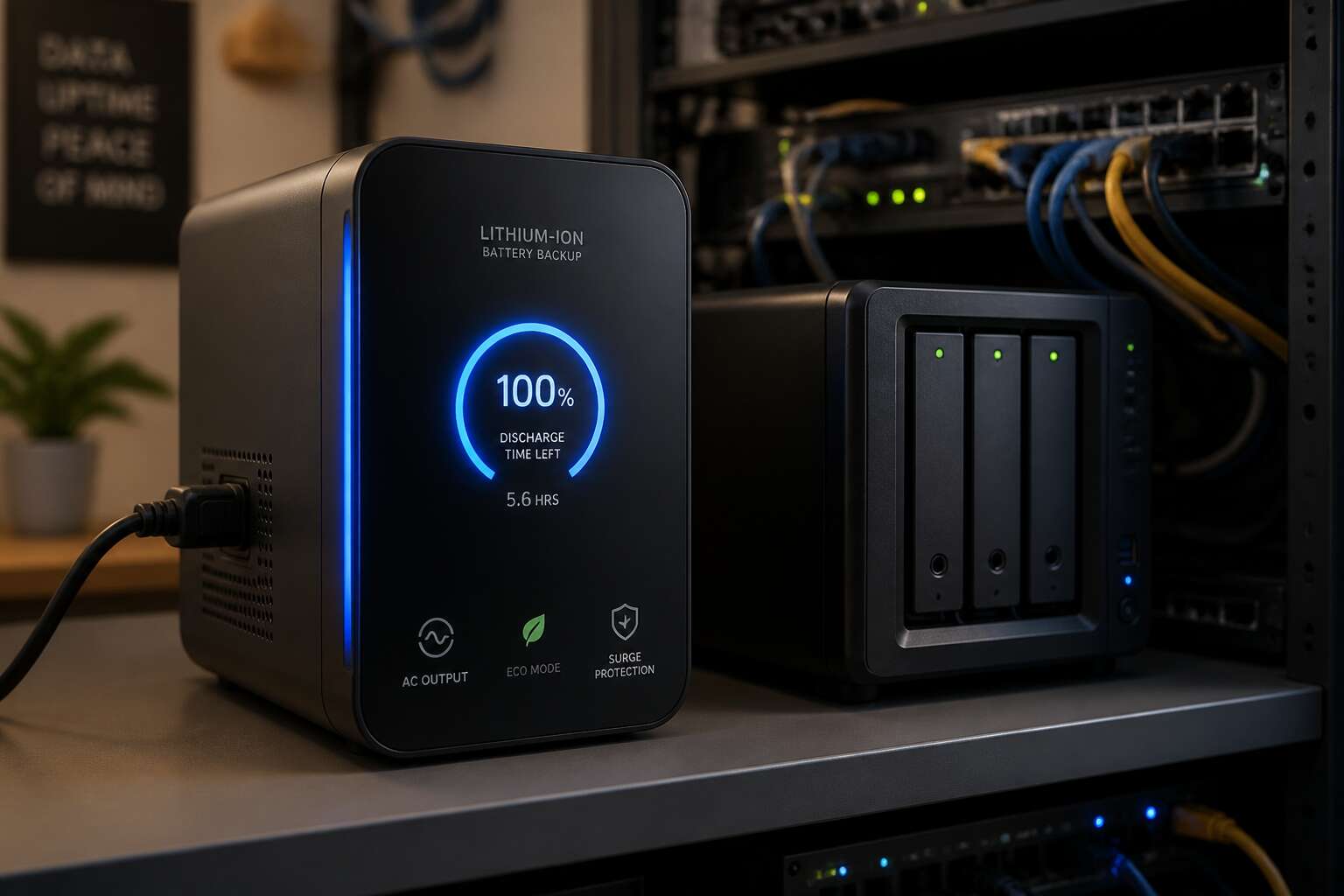
Understanding Lithium-Ion Backup Power
What Is a Lithium-Ion Battery System?
I have watched neighbours buy cheap inverters twice before accepting what a decent system costs. South Africans measure time in stages of load shedding. The li ion battery backup systems now appearing in homes and offices are not simple car batteries with an inverter. They are modular power stations, built around lithium iron phosphate or nickel manganese cobalt cells. Each system pairs the cells with a battery management system that monitors temperature, voltage, and charge cycles. This management is the difference between a device that lasts a decade and one that degrades within months.
A typical residential setup includes:
– Battery modules that stack to increase capacity
– An inverter that converts DC to the AC our appliances need
– A monitoring interface, often via Wi-Fi
The key shift is that these li ion battery backup units charge and discharge daily, quietly, without the lead-acid maintenance rituals of older systems. They cost more upfront, but the cost of frequent replacement needs to be counted too.
How It Works in Backup Applications
A backup system proves its worth in the seconds after the grid fails. The li ion battery backup detects the voltage sag and engages the inverter within 20 milliseconds. That speed is why lights flicker, if they even flicker! The battery management system then controls discharge, holding each cell within a safe temperature and charge window. This matters because load shedding schedules rarely show up on time.
During load shedding, the process reverses. The same li ion battery backup absorbs energy from solar panels or the grid and stores it for the next interruption. Because lithium cells tolerate daily cycling, the system can run this cycle for years without the routine maintenance older batteries demanded. Inverter efficiency drops as heat builds up, so placement matters. I have timed our kettle from a 5 kWh unit at four minutes. The real value is knowing how each component behaves under strain.
Key Advantages Over Traditional Batteries
Ask anyone who has run a traditional battery bank for years, and they will tell you about the constant maintenance. A li ion battery backup simply works. The numbers speak clearly: lithium handles up to 6,000 cycles, while lead acid gives up around 300. That difference matters in a country where load shedding has no fixed schedule.
The advantages go beyond lifespan:
- Charging is three times faster.
- Depth of discharge hits 90% without damage.
- No gas release or acid leaks.
- Half the weight for the same stored energy.
I have seen both options in real homes. The reliability of a lithium setup beats the constant checking of old batteries.
Lifespan and Performance Metrics
A li ion battery backup carries two distinct clocks: cycle count and calendar age. Cycle count tracks full discharge/recharge events, but calendar age often kills the unit faster in South Africa. Heat accelerates electrolyte decomposition. In Durban, a battery in an unventilated garage can lose 15% capacity in one year without ever being cycled. I have seen this happen.
Performance metrics go deeper than the labelled ampere hours. Round trip efficiency shows energy lost to heat and resistance. Internal resistance climbs as cells degrade, causing voltage sag when the kettle draws power. These changes appear months before capacity drop.
Track these numbers quarterly:
– State of health relative to baseline
– Round trip efficiency at half rated load
– Internal resistance increase from first measurement
A healthy li ion battery backup maintains above 95% round trip efficiency after two years! Record everything, because numbers lie less than memory.
Choosing the Right Backup Solution for Your Needs
Assessing Your Power Requirements
In 2023, South Africa endured more than 6,000 hours of load shedding. That reality transforms selecting a li ion battery backup from a luxury into a necessity. Yet no single answer fits every household.
Start with the essentials. Walk your property and note every device you genuinely need during an outage. Refrigerators, Wi-Fi routers, medical equipment, lights: each one demands a specific amount of power. A li ion battery backup sized for a kettle and a television will fail when asked to run a borehole pump.
Assessing your power requirements involves three steps:
- List the devices you must keep running.
- Identify their starting and running wattage.
- Estimate the hours you need them active.
That final figure, the watt-hours, becomes your baseline. I have watched too many households overspend on capacity they never use. A modular system grows alongside your needs, especially as your family expands. Choose the unit that matches your life, not the one that impresses your neighbours!
Comparing Capacity and Wattage Ratings
Here’s what often trips up homeowners: the wattage rating on a li ion battery backup tells you the maximum power it can deliver at a single moment, while the capacity rating tells you how long it can sustain that flow! A unit with high watts but low capacity will start your fridge but die after twenty minutes. The opposite, high capacity but low watts, cannot handle the surge from a deep-freeze compressor.
When comparing systems, I force my clients to look beyond the sticker.
- Check the continuous wattage, not just the surge peak.
- Verify usable capacity, because some brands quote gross numbers.
- Match the battery voltage to your inverter’s input requirements.
That last point is crucial for South African installations where grid voltage fluctuates wildly.
Evaluating Portability and Installation
The best li ion battery backup for your home is the smallest unit that carries your evening load through a four-hour stage six block! Compare that load against your inverter’s continuous wattage rating, not its surge peak. Then turn to the physical realities of installation.
Portability matters more than most buyers admit. A 120 kg lithium unit bolted to the wall cannot follow you when you move house. Check the IP rating too. IP54 units handle dust and water splashes. Others are indoor devices that need airflow, not a dusty garage corner.
- Measure the space before you buy. Lithium batteries need ventilation.
- Ask about the changeover switch. Manual saves money; automatic keeps the freezer running while you sleep.
Budget Considerations
In South Africa, a li ion battery backup can cost less than an annual fuel bill, yet buyers get fleeced by ignoring lifetime costs. The upfront price is only the opening bid. You also pay for installation, cabling, and the electrician who charges ZAR 500 to stare at your meter.
Compare warranties with care. A 10 year warranty means nothing if the fine print excludes heat damage from your Johannesburg attic. Factor in replacement costs. Some cheap units degrade quickly, which sounds like a bargain until you buy a new one after three years.
- Battery management system quality, which affects premature failure.
- Communication accessories for monitoring, often sold separately.
- Shipping costs for a 30 kg brick to Cape Town or Durban.
Remember that a li ion battery backup is a long term investment. The best budget covers all components, and the battery box is far from the entire cost.
Safety Certifications to Look For
In South Africa, the difference between a certified and a counterfeit li ion battery backup can show up as a puff of smoke in your garage. That is not hyperbole. The market is filled with units carrying fake safety marks. Choosing the right solution demands more than comparing prices. Match the battery’s continuous discharge rate to your essential loads. A fridge and a fibre router draw very different currents, and a unit that handles one may struggle with the other.
Safety certifications are the primary safeguard. Look for these marks on the unit and its cells:
- IEC 62619 for industrial lithium battery safety
- SANS 62262 or equivalent local approval
- UN 38.3 transport test certification
A genuine li ion battery backup certification means the battery management system has undergone thermal and short circuit testing. A sticker alone means nothing. A mark that cannot be verified against the issuer’s public database warrants suspicion.
Installation and Maintenance Best Practices
Step-by-Step Setup Guide
When evening load shedding hits, a li ion battery backup needs a deliberate installation routine. Start with a cool, dry location away from damp floors and direct sun. Mount the unit on a sturdy wall or shelf, leaving 20 centimeters of clearance for airflow.
Connect the leads to your inverter, following the torque specs in the manual. Run a full discharge test to confirm the voltage holds under load. For maintenance, check terminal lugs every season and wipe off any corrosion with a dry cloth.
- Update the battery management firmware regularly.
- Perform a monthly capacity test with a known appliance.
- Inspect cooling vents for dust and insects.
A li ion battery backup, installed with care, serves for years when you respect clean connections and steady temperatures. I promise, it’s worth every minute!
Proper Ventilation and Temperature Control
Temperature swings are the leading cause of premature cell failure in a li ion battery backup. These units prefer steady conditions, not extreme shifts. Heat degrades the cells at a chemical level, while cold dulls their response. Place the system in a spot where air moves without dust. Avoid garages or roof spaces where temperatures swing wildly.
Seasonal checks matter. Test the unit’s enclosure for trapped heat after long summer days. Confirm the temperature sensor still reads accurately. Replace worn seals that allow moisture inside.
The following routine keeps the system honest:
- Verify ambient temperature each week
- Wipe vent grilles with a dry cloth
- Monitor the thermal warning indicator
A stable environment protects the chemistry behind every watt delivered. Respect airflow and the unit returns consistent service for years.
Regular Testing and Monitoring
Installation is the beginning, not the end. A li ion battery backup demands ongoing discipline. Check terminal torque and inspect for corrosion every quarter. Loose connections increase resistance and waste energy.
Load testing reveals the actual capacity. Run a monthly discharge at 50% of rated power. Log every result to spot degrading cells early. Monitoring software tracks voltages and temperature. Imbalances between cells predict failure.
- Test safety cutoffs each month
- Calibrate the state of charge meter
- Clean dust from electrical enclosures
South African users face frequent load shedding. Your li ion battery backup must stay ready. A structured testing routine ensures that it does, without surprises!
Extending Battery Life Through Smart Charging
A lithium cell kept at full charge loses about 20% capacity per year. Smart charging determines the lifespan of your li ion battery backup. Avoid daily full charges, especially in South Africa’s heat. Set the charger to stop around 3.5 volts per cell. That reduces cathode stress while keeping reserve. Also, skip fast charging when the grid fluctuates. High current creates heat, and heat degrades lithium cells. Keep charge current below 0.5C if possible.
For idle weeks, discharge to 50% and disconnect the charger. This simple habit prevents capacity loss. Use a temperature sensor to lower voltage on hot days. Follow these charging habits:
- never charge at full current above 35°C
- unplug at 80% for daily use
- do a full charge monthly to balance cells
No special expertise is needed, only consistent attention.
Common Pitfalls to Avoid
The most fashionable mistake in South African homes is placing the battery unit on a fluffy carpet. It looks charming, but the airflow suffocates. Another darling error: cramming the inverter’s cables into a tight coil. Heat builds up where wire bends.
Proper installation demands a flat, hard surface and a few centimeters of clearance. Check terminal torque quarterly. Dust accumulates on contacts, so blow it out gently.
Common pitfalls to avoid:
- Mounting near water or direct afternoon sun.
- Overlooking the manufacturer’s torque spec.
- Using extension leads for high draw appliances.
Each misstep shortens the li ion battery backup’s usable lifespan. The manual exists for reasons beyond liability protection.
Cost Analysis and Long-Term Value
Upfront Costs vs. Long-Term Savings
Every rand spent on a li ion battery backup is a visible cost until the first grid failure. Then it proves essential. The upfront price tag is steep, but the arithmetic shifts when you calculate outage costs per hour: lost productivity, spoiled stock, missed deadlines.
Consider a typical South African household. Over five years of scheduled load shedding, a conventional backup system demands battery replacements, fuel, and maintenance. A lithium unit, though pricier initially, holds its charge longer and cycles more deeply. My own system paid for itself in avoided losses by year three.
Here is what the numbers reveal:
- Initial capital outlay for li ion battery backup: high, but predictable.
- Total cost of ownership over a decade: often 40% lower than alternatives.
That is the actual value. The savings are not instant, but they compound with every blackout you barely notice.
Return on Investment for Home and Business
In my audits of client estates, the true ledger of a li ion battery backup reveals itself only after months of irregular grid supply. For a home, the calculation lives in uninterrupted freezers, working security systems, and children studying through evening outages. For a business, it appears in completed orders and retained staff hours.
The return on investment follows different rhythms depending on scale. A residential unit might take four to five years to justify its cost. A commercial installation often recovers its capital within two billing cycles of avoided downtime, which surprises most owners!
The hidden variables shape every projection:
– Tariff escalation makes each stored kilowatt worth more next year
– Battery chemistry tolerates thousands of partial discharges without degradation
– The salvage value of a lithium pack after a decade of service
Each parameter shifts the break-even point, yet the direction remains consistent. A li ion battery backup converts grid fragility into a fixed, predictable monthly figure.
Warranty and Support Options
Cost analysis for a li ion battery backup often ignores the fine print of warranty terms. In South Africa, the price per kilowatt is only the opening figure. The real ledger includes the cost of a replacement unit if the inverter fails, or the fees for a technician to travel to your suburb. A warranty that only covers the cells, not the battery management system, leaves a significant gap.
- Does the warranty cover the battery management system?
- Are installation defects included?
- What is the turnaround for a claim?
Support options shape the long term value. Some suppliers offer free firmware updates; others charge a subscription. The best contracts include remote diagnostics and a local service centre. When comparing warranties, verify the cycle rating and the response time. These details determine whether your li ion battery backup delivers five years of steady service or a series of expensive surprises. The difference between a good and a bad warranty is measured in lost power and wasted money.
Environmental Impact and Recycling
Nobody buys a li ion battery backup for fun. You buy it because load shedding left you no choice. The long-term cost ledger, however, depends on more than the rand-per-kilowatt figure. A unit that degrades quickly under Durban humidity or Highveld heat will cost you twice over. The real metric is levelised cost per cycle, not the upfront price.
Environmental impact requires its own line item. Lithium-ion cells contain recoverable cobalt, nickel, and lithium. South African recyclers accept these, but take-back policies vary wildly. Some suppliers charge a disposal fee; others include it. I’d argue the environmental cost is easier to ignore than the financial one. That is a mistake.
- Cycle life at your typical depth of discharge
- Degradation curve in your climate
- Recycling logistics and fees
Every rand spent on a li ion battery backup should account for both the kilowatt and the eventual kilogram.
Future Trends in Backup Energy Storage
Advancements in Lithium Technology
As energy grids strain under load, the quiet evolution of lithium technology promises measurable gains. By 2030, solid-state designs could double the energy density of today’s li ion battery backup systems, reducing physical footprint while raising safety margins. Researchers are now refining silicon anodes and hybrid electrolytes, reducing degradation through thousands of cycles.
Households in South Africa face load shedding, which demands dependable reserves.
- Self-healing electrode chemistry
- Modular cell architectures for scalable voltage
- Cobalt-free cathodes for ethical sourcing
These innovations lower long-term operational costs, but the real breakthrough lies in intelligent thermal regulation. Without it, even advanced cells perform poorly under constant heat. The next generation of li ion battery backup will likely communicate with home energy systems, adapting to tariff shifts or weather patterns. We are only beginning to grasp what that means for daily life!
Integration with Solar and Smart Homes
South Africa’s residential solar rollout is accelerating, with over 20% of new installations now paired with some form of storage. The next stage of this evolution isn’t just more panels or bigger inverters; it’s the seamless orchestration of every electron in the home. A li ion battery backup system is no longer a passive reserve. It is becoming the central brain of the household, deciding when to charge, when to discharge, and when to sip from the grid to avoid peak tariffs.
This intelligence extends beyond simple timers. Future systems will learn your family’s habits, anticipate evening surges, and hold a buffer for the unexpected storm that kills solar generation. For homeowners, this means:
– Automated load shedding for non-critical circuits
– Dynamic switching between solar, battery, and grid sources
– Remote monitoring via a single app for the entire energy ecosystem
The goal is reliability without manual intervention. As software matures, the li ion battery backup will manage your home’s appetite with minimal waste, turning stored energy into a strategic asset that responds to weather forecasts and grid signals. You’ll check a screen less and trust the system more, which is the quiet promise of this integrated future.
Smart Battery Management Systems
The next significant advance for stored energy lives in the software, not the cells. A li ion battery backup with a modern battery management system predicts its own health, adjusts charge curves in real time, and alerts you before a cell drifts out of balance. You no longer need to monitor every cycle manually.
These systems interact with the grid in ways that did not exist a decade ago. They buy power when tariffs are low, sell when prices spike, and only notify you when a genuine fault demands attention.
- Self-learning discharge patterns
- Real-time degradation modelling
- Over-the-air firmware updates
The result is a battery that maintains its performance and delivers more usable capacity per cycle over its lifetime.
Market Predictions and Emerging Solutions
The era of buying a backup battery and forgetting about it is ending. Battery chemistry evolves faster than regulatory frameworks, and South Africa’s energy market illustrates the gap. The next decade will see li ion battery backup systems shift from reactive appliances to proactive infrastructure. Analysts project global storage capacity to multiply several times before 2030, driven by falling cell costs and persistent grid instability.
Emerging solutions gaining traction:
- Second-life EV batteries repurposed for stationary storage
- Sodium-ion alternatives for low-cost, high-cycle duty
- Virtual power plants aggregating residential storage units
Market watchers in Johannesburg and Cape Town observe a steady movement toward modular systems. Early adopters tend to be pragmatic homeowners rather than the wealthy. They treat stored energy as a commodity, not a luxury.

0 Comments