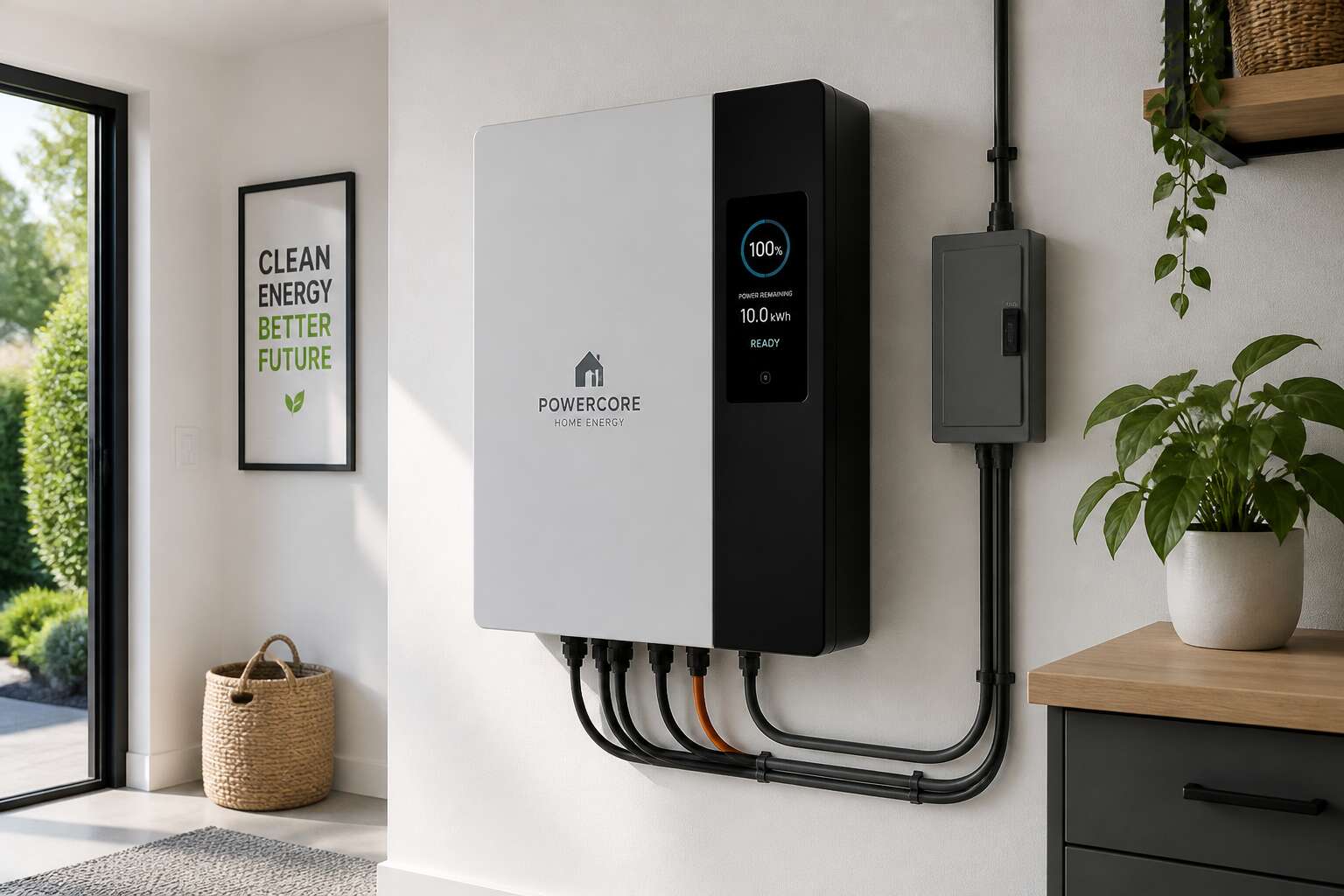
What Home Battery Backup Systems Do
Core Function of Residential Energy Storage
When municipal supply fails, most homes go dark. A battery backup system for home alters the outcome by storing electricity during stable periods and discharging it at the first flicker of disruption. In South Africa, where load shedding is a recurring reality, I have watched this stored reserve turn a dreaded evening into a normal one.
The core function is deceptively simple: convert alternating current to direct current for storage, then invert it back to power your circuits. This process delivers three tangible benefits:
- It maintains seamless operation of fridges and routers during outages.
- It shifts solar energy into evening hours, reducing reliance on expensive peak tariffs.
- It smooths voltage fluctuations that can damage compressors and motherboards.
How They Interact with the Electrical Grid
South Africa’s electricity tariffs have climbed more than 200% in the last decade. That reality has turned the battery backup system for home into a practical necessity. It does not simply wait for a blackout. It monitors the grid continuously, reading frequency and voltage signals to determine when to charge and when to hold.
During stable periods, the system draws power from the grid, often at off-peak rates, and stores it. When demand surges or Eskom implements load reduction, the system releases that stored energy. The interaction with the grid follows strict protocols:
- It synchronises with the grid’s AC waveform before switching over.
- It disconnects from the grid during outages to protect utility workers.
- It prioritises solar energy before drawing from the grid.
This process repeats silently, second by second, within a unit mounted on your wall. The grid remains the primary supply, but the battery backup system for home determines how much of that supply you actually need.
Key Components Inside a Home Battery Unit
Open a residential energy storage cabinet and you will find a carefully arranged set of components. I have opened a few of these units, and the layout is precise. The battery cells, often lithium iron phosphate, store the actual energy. Around them sits a battery management system, or BMS, which monitors temperature, voltage, and charge levels continuously.
The inverter converts direct current from the cells into alternating current for your appliances. A cooling fan or heat sink keeps temperatures within safe limits, because heat degrades cell life.
Other essential elements include:
- Contactors that disconnect the unit during faults
- Sensors that track grid frequency and load
- A control board that runs the charging and discharging logic
These parts work inside a sealed metal enclosure. The battery backup system for home is a compact assembly of interacting technologies, not a single device.
Benefits and Potential Drawbacks
Protecting Against Power Outages and Blackouts
When the grid fails, as it did during last winter’s storm, a battery backup system for home ensures your evening proceeds as planned. I have watched families rely on candles while neighbors powered their fridges effortlessly. The real benefit? Continuity!
Protection against outages means your security system stays armed. Your medical devices keep running. Your internet router remains online, keeping you connected to work and emergency services. This is not about luxury. It is about maintaining normalcy when everything else stops.
Yet drawbacks exist. Initial costs remain high. Batteries degrade with use, requiring replacement after a decade. You must also maintain them, checking inverters and wiring. A home battery does not stop load shedding, it just buffers its impact. For frequent, long outages, you may still need a generator as a supplement.
Lowering Electricity Bills Through Load Shifting
Some South African municipalities charge peak tariffs almost double their off-peak rates. That gap makes a battery backup system for home a practical tool for lowering electricity bills. Charge the battery during cheap overnight hours, then draw power from it as the evening peak arrives. You preserve your routine without paying peak prices.
Yet capacity imposes boundaries. A battery backup system for home sized for tea and television will not cover a festive dinner’s full kitchen load. You will still schedule the geyser and irrigation for off-peak windows, or the battery depletes before sunset ends.
- Geyser and pool pump timers
- Dishwasher and washing machine delayed starts
Check your municipality’s metering first. If your meter does not support time-of-use billing, or your tariff is flat, the load-shifting benefit quietly disappears. Match battery capacity to your actual evening usage, then rely on the tariff schedule to produce savings.
Enabling Solar Self-Consumption
When your solar array outpaces your daytime needs, a battery backup system for home captures the surplus for later. You stop exporting that excess to the grid for a token credit and start displacing evening electricity you would otherwise buy. That shifts your home from passive metering to intentional energy management.
Yet self-consumption comes with constraints. The battery’s usable capacity limits how much evening energy you can reclaim. Charge it fully by midday, and you still lose sun that could have warmed the pool pump. Discharge it at midnight,and you pull from grid again. Efficiency losses also stack: every charge cycle removes a few percentage points from the energy you stored.
- Let the battery cover baseload, not the oven’s surge
- Size the system around your night-time usage, not your daytime generation
These drawbacks are manageable, but they deserve honest accounting. A battery backup system for home improves solar self-consumption only when its storage matches your evening load profile.
Environmental Impact and Emissions Reduction
Every kilowatt-hour stored is a kilowatt-hour your coal plant didn’t burn. But honest accounting demands we examine the full lifecycle.
South Africa’s grid runs heavily on coal, so a battery backup system for home charged from the grid still carries a carbon cost. Charged from solar, though, it shifts clean energy into peak evening hours, displacing the dirtiest generation. The trade-offs matter:
- Displacement of peaker plant output reduces emissions
- Manufacturing lithium cells carries mineral extraction costs
- Recycling remains immature, but improving
The environmental equation depends on how often you cycle the battery and what charges it. A battery backup system for home used daily earns its footprint back faster than one left idle. Efficiency losses are a minor penalty compared to the coal emissions avoided.
Initial Investment and Long-Term Payoff
R80,000 to R200,000. That is what a properly installed battery backup system for home costs in South Africa today, and the number alone makes most homeowners wince!
The payoff arrives through tariff arithmetic. Eskom has raised prices at double digit rates for years, so every kilowatt hour drawn from your battery fixes today’s price for tomorrow’s use. A system cycled daily displaces roughly 10 kWh of peak electricity, and that compounding effect recovers capital within seven to nine years.
Drawbacks exist. Lithium cells degrade with each cycle, and most units need replacement after 3,000 to 6,000 cycles. Heat accelerates that decline, so placement matters more than most buyers realise. From what I have seen, inverter repairs carry heavy costs, and warranty terms vary widely between installers.
The economics depend on:
– Daily consumption and how much shifts into stored power
– Whether solar panels or grid electricity feed the battery
– Warranty and degradation guarantees
A correctly sized battery backup system for home matches your load profile, not your neighbour’s. Oversizing extends the payback period.
Exploring Battery Chemistry and System Types
Lithium-Ion vs. Lead-Acid Batteries
In South Africa, where grid instability makes stored energy a daily consideration, the battery chemistry you select determines your system’s behavior. Lithium-ion cells operate at higher voltage densities, while lead-acid units demand deeper routine checks. That difference becomes apparent with each maintenance cycle.
Consider the typical lead-acid bank: robust, but sensitive to deep discharge. Each cycle below fifty percent state of charge shortens its lifespan. Lithium-ion, with its battery management system, tolerates deeper drains without permanent damage. The trade-off emerges in upfront price and thermal behaviour.
- Lead-acid: lower cost, heavier, slower charge acceptance.
- Lithium-ion: higher cost, lighter, faster recharge, longer cycle life.
Your battery backup system for home should match your usage pattern, not a brochure promise. A weekend cottage with occasional outages may suit lead-acid. A daily load-shifting routine demands lithium’s endurance. The nuance lies in how each chemistry reacts under your specific conditions.
AC-Coupled vs. DC-Coupled Configurations
A 5 percent efficiency loss is invisible until you need every watt during a load shed. That loss lives in the coupling topology of your battery backup system for home, the quiet wiring decision between AC and DC.
DC coupling sends solar power straight into the battery with one conversion. AC coupling, the retrofit standard, forces two conversions, from DC to AC and back. Each conversion wastes energy. In South Africa, where grid instability demands daily reliance on stored power, that waste adds up.
– DC coupled: single converter, ideal for new installations.
– AC coupled: two converters, best for adding storage to existing solar arrays.
I have watched homeowners choose AC coupling because their inverter predates the battery. They trade efficiency for compatibility, a practical choice that respects what they already own!
All-in-One Systems vs. Modular Setups
Most homeowners I meet assume a battery backup system for home arrives as a single sealed box. In South Africa, where loadshedding is a daily reality, the market splits into two philosophies, all-in-one units and modular setups. All-in-one systems combine inverter, charge controller, and battery cells in one enclosure. Modular setups let you pair separate components from different manufacturers.
The chemistry inside matters as much as the form factor. Modular systems make cell replacement easier. If one battery module degrades, you swap only that unit! All-in-one units keep everything under one warranty, but they lock you into the manufacturer’s ecosystem. A battery backup system for home that you plan to expand needs modular flexibility.
Your physical space and future plans determine the right choice.
- All-in-one units offer a smaller footprint, single warranty, and simpler installation.
- Modular setups allow expansion, easier component upgrades, and vendor flexibility.
Portable Power Stations for Light-Duty Use
In South Africa, portable power stations are the devices we underestimate. These compact units, filled with lithium cells, deliver enough energy to keep a router alive through loadshedding. A 300 watt-hour unit runs a laptop for three hours or lights for five. That versatility makes them a gateway purchase for anyone curious about a battery backup system for home.
Battery chemistry has shifted toward lithium iron phosphate, or LFP. Unlike older formulations, LFP tolerates deeper discharges and higher temperatures. It also survives more cycles, which matters when you drag it from a loadshedding session in Johannesburg to a weekend braai in the bushveld.
Choosing between a fixed residential battery and a portable station breaks down simply:
- Fixed systems connect permanently to your wiring; portable units plug in anywhere.
- Portable units let you test real power needs before committing.
For light duty, that flexibility often proves more valuable than raw capacity.
Whole-Home vs. Essential-Circuits Backup
When the grid fails, how much of your home truly needs power? That question separates essential-circuit backup from whole-home systems.
Battery chemistry has stabilised around lithium iron phosphate, but the architecture of the system decides its daily value. A battery backup system for home can be wired to protect every circuit or only a few.
Essential circuits typically cover:
- a router
- a fridge
- security lighting
This approach requires fewer kilowatt-hours and a smaller inverter. Whole-home backup extends to geysers, ovens, even pool pumps. It demands more capacity and a higher upfront cost.
Choose essential circuits if you want resilience during extended outages. Choose whole-home if you need comfort features to stay active. Many South African households start with essential circuits, then expand once they measure real consumption.
Generator Integration and Hybrid Solutions
In South Africa, a battery backup system for home now works as an act of planning rather than a shelf purchase. The chemistry inside has settled on lithium iron phosphate, but the architecture still splits: a dedicated inverter, or amodular stack configured to your loads. That choice determines how easily you can attach a generator later.
Hybrid solutions let the inverter monitor state of charge and start the generator only below a set threshold. This sequencing halves fuel use, prevents deep discharge, and gives the battery real longevity. The generator becomes secondary, answering to the battery rather than to a timer.
This demands measured consumption data. Track your essential loads for two weeks, set limits, then let the system decide. That is the practical core of backup.
Sizing, Installation, and Compliance
Calculating Your Power Needs and Capacity
Calculating your power needs requires precision. I once watched a neighbour size his battery backup system for home by adding every appliance’s wattage, then doubling it. That is how you overpay! Begin with a critical load analysis using a plug-in meter to measure actual consumption over one week. Capacity follows from hours of autonomy, not arbitrary guesses.
Installation demands compliance with South Africa’s municipal bylaws and SANS 10142 for wiring. Your certified installer must handle the connection, because tampering with the main board invites flames and fines. When she calculates, she considers:
- Peak surge versus continuous load
- Depth of discharge for the battery chemistry
- Seasonal demand shifts
Keep the battery close to the distribution board, in a ventilated space. A battery backup system for home that is perfectly sized but badly installed is a costly lesson.
Choosing the Right Location and Mounting
For a battery backup system for home, placement determines longevity. The garage may seem convenient, but South African summers push internal temperatures above the comfort range of lithium cells. Cells throttle charge when hot, so your investment idles during load-shedding.
Mount the unit on a fire-rated backboard, off the floor, and away from water pipes. Compliance requires a Certificate of Compliance from your installer, which municipalities check during property transfers. Keep the manufacturer’s clearance gaps clear. A wall-mounted unit also protects against rodent damage, a real concern in older suburbs.
When finalizing the location, consider:
- Proximity to the distribution board to limit cable losses
- A south-facing wall shielded from direct sun
- Ventilation that stays dust-free and accessible for firmware updates
The certified installer verifies the inverter’s DC isolator sits within easy reach. Emergency responders need to kill power quickly. Municipal inspections check the connection to the distribution board,and non-compliant wiring may force disconnection. Batteries swell when constrained, so never compress the housing against cabinetry. That and proper mounting keep your warranty intact.
Electrical Wiring, Permits, and Safety Codes
Proper sizing starts with a load assessment, not a guess. An electrician measures each circuit’s draw during peak evening hours to match the battery backup system for home to actual usage. Oversizing wastes capital; undersizing causes nuisance trips when the kettle and geyser compete.
Installation follows a strict sequence. The installer isolates the distribution board, fits surge protection, and torques every DC connection to specification. Municipalities require a Certificate of Compliance before the battery backup system for home energises, and some metros now inspect the inverter’s grid-tie permit separately. Wiring must meet SANS 10142-1, and the earth leakage unit needs a dedicated circuit.
Compliance documentation includes the COC, the inverter’s type approval certificate, and a wiring diagram. Keep these with your municipal approval records. Eskom’s grid code applies when you export power, which changes the permit path.
Maintenance, Lifespan, and Cost Optimization
Best Practices for Prolonging Battery Health
Most residential batteries fail due to neglect, not manufacturing defects. A battery backup system for home often exceeds its rated lifespan when you prioritize routine care. Heat causes the most damage. Every degree above 25°C can shave months off cycle life. Install your unit in a shaded, ventilated space. Avoid tight cupboards.
Your discharge habits matter equally. For lithium ion cells, the shallower the discharge each cycle, the longer the pack endures. Set your inverter to hold back 20% to 30% capacity. Resist the urge to always charge to 100%; 90% works well for daily use.
I recommend a seasonal maintenance ritual:
- Clean dust off cooling fans and vents
- Check battery terminals for corrosion or loose connections
- Review the system’s temperature log in its app
Firmware updates also deliver minor efficiencies that compound over years. The cheapest repair is prevention. A few minutes each quarter keeps your investment running strong.
Monitoring Performance and Remote Management
Your battery backup system for home rarely fails without warning, provided you watch its telemetry. Modern apps deliver live cell voltages, cycle counts, and inverter errors straight to your phone. Johannesburg owners who scan these metrics every few days often spot voltage drift before it becomes a shutdown.
Remote management covers the practical tasks: adjusting charge thresholds, toggling economy modes, and checking standby draw without visiting the garage. Temperature history logs deserve a glance after heat waves too. A battery backup system for home with sluggish telemetry alerts often fails with no warning.
- Compare weekly state of charge curves with historical patterns
- Check that cloud sync timestamps match your load shedding schedule
- Verify firmware updates installed cleanly overnight
None of this takes longer than ten minutes per week. That habit extends pack life and keeps warranties intact.
Warranty, Insurance, and Replacement Planning
Most homeowners read their warranty only after a failure, which is the wrong moment. In South Africa, grid instability accelerates wear, so a battery backup system for home demands proactive care. That means checking electrolyte levels in lead acid models and keeping lithium units away from heat.
Lifespan varies from eight years for hard cycled lead acid to fifteen for well managed lithium. Every 1°C above 25°C cuts battery life by six months. Plan replacement budget accordingly.
Insurance is another layer. Standard household policies often exclude surge damage to inverters. Confirm your coverage with an endorsement, and ensure your battery backup system for home has an overvoltage rider.
Replacement planning:
- Record the installation date and model.
- Test capacity annually.
- Save a quote for a new unit.
Warranty claims require documented maintenance. Keep logs and receipts. That is the difference between a paid replacement and a bitter argument.
Rebates, Incentives, and Financing Options
South Africans often install a battery backup system for home, then forget it until the lights flicker. Maintenance takes ten minutes a month. Dust the vents, torque the terminals, and keep discharge above twenty percent. Lithium cells degrade faster in heat. Lead acid cells degrade faster when left empty. This routine extends lifespan and lowers the real cost per year.
Cost optimization needs outside cash. Municipalities and banks now offer rebates, incentives, and financing options for residential storage:
- Cash rebates from certain metros
- Green energy loans at prime rates
- Vendor discounts when bundling solar

0 Comments