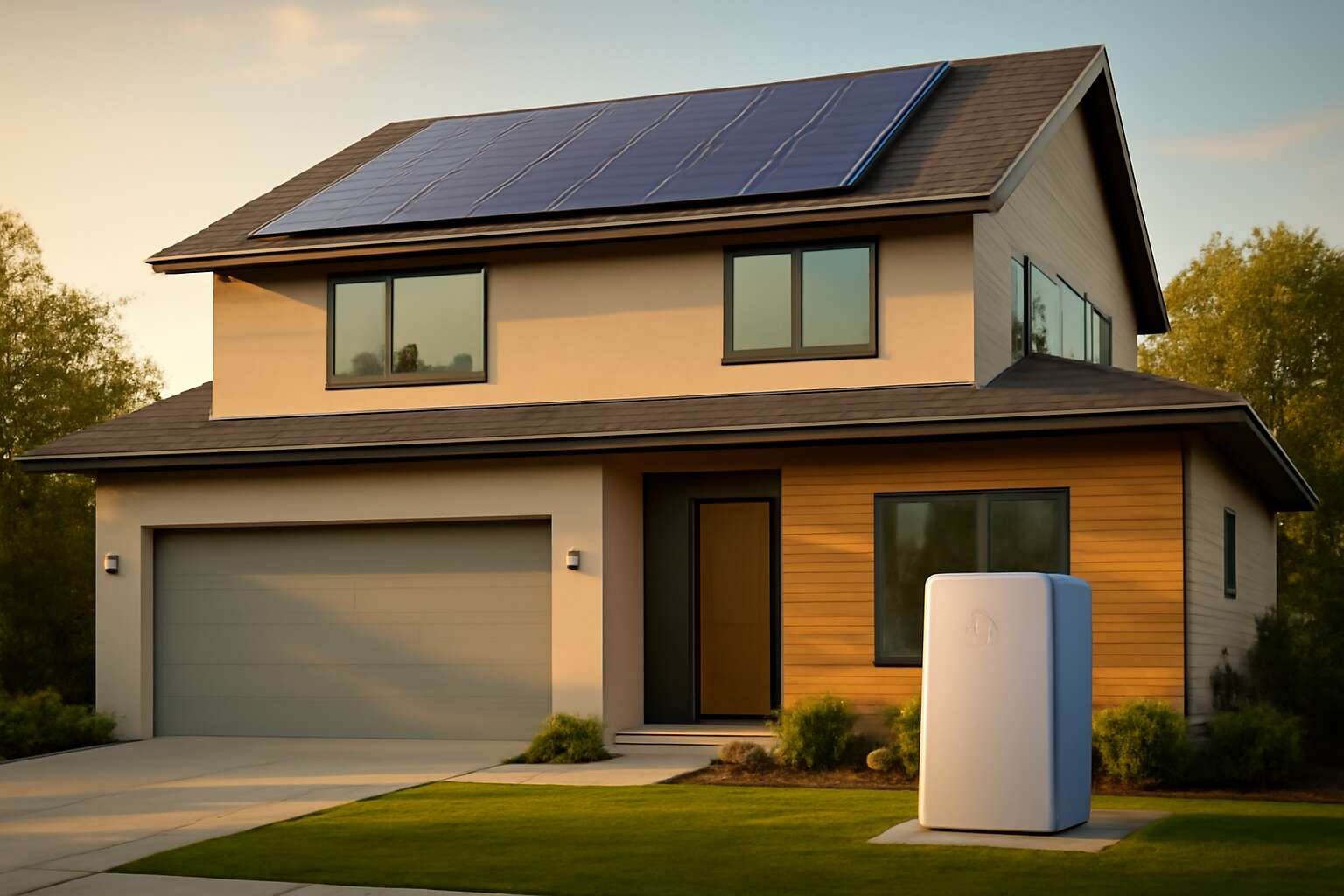
Understanding residential battery backup systems
What is a home battery backup and how it works
Power has a stubborn way of testing a home’s resolve, especially under a South African load-shedding schedule. Picture a calm dawn: kettle warming, laptops booting, the fridge humming, all without a hint of chaos. A well‑chosen battery solution turns fear into steadiness and keeps life flowing.
That cushion materializes as a home battery backup house—the quiet heart of modern resilience—storing daytime energy and releasing it when mains falter, so coffee stays hot, streaming continues, and daily rhythms stay intact.
The mechanics are elegant in their simplicity:
- Hybrid inverters synchronize with the grid and solar input
- Battery banks store energy in secure, climate-controlled modules
- Smart controllers prioritize essential loads and shed the rest
With these pieces, a residence in SA can glide through outages with quiet dignity, preserving comfort without shouting for attention.
Key advantages of a battery backup system for homes
South Africans know that load-shedding isn’t a hiccup—it’s a daily audition for resilience. Recent surveys show that more than 60% of homeowners are weighing backup power solutions. A well-considered battery backup house quietly keeps the kettle on, the Wi‑Fi humming, and the fridge faithful, even when the grid flirts with darkness.
Understandably, the appeal lies in reliability and comfort. You gain predictable power during outages, protection for sensitive electronics, and the ability to keep essential routines intact without drama or surprise bills.
- Guaranteed essentials on tap—kitchen, communications, and refrigeration stay reliable.
- Smart load management that prioritises what matters and sheds the rest automatically.
- Enhanced power quality with smoother voltage and protection against surges.
With solar input and intelligent control, such a system quietly redefines what it means to live well at home—less grid friction, more everyday certainty, and a touch of futuristic calm.
Typical components and system architecture
Understanding residential battery backup systems means peering into the quiet heartbeat of a modern home. For a battery backup house, the architecture is a careful choreography: a dependable battery bank stores energy, an inverter morphs it into usable AC, and a charger keeps the cells refreshed as sun beams dip and rise. An energy management system watches loads, prioritises essentials, and keeps the kettle warm and the Wi‑Fi steady when outages arrive like uninvited guests.
Key components you’ll typically encounter include:
- Battery bank (lithium or advanced lead-acid)
- Inverter/charger with automatic transfer switching
- Solar input and charge controller
- Energy management system (EMS) and sensors
- Monitoring interface and app connectivity
Together, these parts form a resilient backbone that preserves daily routines and protects sensitive electronics during load-shedding across South Africa—a true battery backup house in practice.
Common myths about home battery backups
In SA, outages have become the drumbeat of daily life. A battery backup house isn’t a gadget; it’s a disciplined choreography of storage, conversion, and smart load management. “Power is the new water: you notice it most when it’s gone,” says an energy engineer, and the line sticks like tape on a fridge door. It keeps the kettle boiling and the Wi‑Fi humming when the grid plays hide and seek—a quiet guardian you can actually hear.
- Myth: You need a giant battery to get uninterrupted power 24/7. Reality: capacity and solar input are balanced to cover essentials first.
- Myth: It’s maintenance-heavy. Reality: modern chemistries need minimal upkeep beyond routine checks.
- Myth: It powers everything all the time. Reality: critical loads are prioritized, with smart EMS deciding what runs when.
- Myth: It’s only for outages. Reality: it can smooth grid fluctuations and trim energy bills.
Understanding these myths helps South Africans tailor a plan for steady mornings and budget peace. A properly designed battery backup house delivers reliable routines, even when the lights behave badly.
Sizing and configuration for a home with a battery backup system
Assessing energy needs and critical loads
Power flickers, and the night yawns. Across South Africa, outages stretch for hours, turning kitchens into chilly crypts and living rooms into quiet halls. A well-sized system lets the home breathe again when the grid falters.
Sizing for a battery backup house begins with assessing energy needs and critical loads. I map daily consumption and prioritize refrigeration, lighting, communications, and essential outlets. The configuration should balance storage with discharge depth, ensuring resilience without waste.
For clarity, consider these typical critical loads:
- Refrigeration and freezer (critical to prevent food spoilage).
- Lighting for circulation and safety.
- Wi-Fi router and essential communications.
- Security systems and alarms.
- Water pump or borehole for rural homes.
In the quiet of night, these choices give a steady heartbeat to the home.
Choosing inverter and battery chemistries
Outages in South Africa press like a metronome through the home, but the right setup can keep the kitchen warm and the router online. Sizing starts with choosing an inverter and the chemistry that powers it, balancing cost, life cycles, and surge tolerance. A thoughtful configuration turns a dim hallway into a living room that breathes again when the grid falters.
Two main routes exist for the heart of a battery backup house: inverter behaviour and battery chemistry.
- Inverter types: pure sine wave for sensitive electronics; modified sine waves for simple loads with fewer spikes.
- Battery chemistries: lead‑acid (AGM) for lower upfront cost; lithium‑ion or LiFePO4 for longer life and deeper discharge.
Factors like ambient temperature, cycling frequency, and future solar expansion shape the final pairing. The result is a resilient core that makes evenings feel normal again.
This is the essence of a battery backup house.
Understanding depth of discharge and efficiency
Outages in South Africa press like a metronome, but a well-sized setup acts like a quiet heartbeat in the home. Sizing hinges on depth of discharge and efficiency—two levers that decide how many hours your lights stay on and your fridge stays cool. This balance shapes a true battery backup house, turning tense, blackout evenings into something steadier and almost normal.
- Depth of discharge (DoD) and cycle life trade-offs
- Round-trip efficiency and usable capacity
- Temperature effects on performance
- Future solar expansion and system scalability
Beyond numbers, the harmony of an inverter’s response, a battery’s chemistry, and a practical load profile keeps evenings calm when the grid falters. In this moment, the system isn’t just equipment; it is a quiet promise that spaces feel safe, meals persist, and the house breathes a little easier when shadows lengthen outside.
Integrated solar and grid-tie options
Quiet nights, uninterrupted lights—that’s the oath of a well-sized battery backup house in South Africa. In a country where outages punctuate daily life, a thoughtful hybrid system keeps the home alive when the grid falters. Integrated solar and grid-tie options let the sun do the heavy lifting by day and the battery stand guard after dark.
Sizing allocations hinge on coming changes; consider these factors:
- Typical daily energy needs and critical loads
- Hybrid inverter capacity and charging rates
- Expandable solar and battery chemistry options for future upgrades
- Export strategies and tariff optimization with the grid
The result is a living partnership with sun and storage, where evenings feel steadier and normal returns to a comfortable rhythm.
Backup duration planning and redundancy options
Power outages are the new normal in South Africa, and a well-sized battery backup house keeps the kettle singing while the grid yawns. Start by mapping daily needs: critical loads (lighting, fridge, routers) and their total kWh, then decide how long you want to ride out the absence of grid power. Sizing and configuration hinge on hybrid inverter capacity, charging rates, and future expansion plans.
Backup duration planning and redundancy options are where the fun happens. Consider these levers:
- Backup duration targets: 4–8 hours for essential autonomy; 12–24 hours for a more robust stay-at-home power reserve.
- Redundancy: N+1 configurations, dual inverters, and separate battery strings to isolate faults.
- Future-proofing: scalable solar input and modular chemistry to grow with demand.
The result is a calm evening and a living partnership with sun and storage—the essence of a true battery backup house.
Installation considerations and safety
Permits and zoning requirements
Installing a battery backup house is a choreography of space, heat, and prudence. Installation considerations center on safe heat management, ventilation, and unobstructed service access. Fire safety—clearances, separation from living areas, and robust cabling—guards against the unexpected, while breathing room around the unit keeps performance steady through South Africa’s capricious weather. This battery backup house is a quiet steadiness in the home.
- Verify local electrical permit and certificate of compliance with the municipality.
- Check zoning, building approvals, and where an enclosure may be installed under local by-laws.
- Engage a registered electrician to ensure code compliance, safe wiring, and proper separation from living spaces.
Permits and zoning in South Africa shape where and how the structure may stand: electrical work often requires a registered electrician and a certificate of compliance; building plans or planning approvals can be required for new enclosures.
Placement and mounting guidelines
Power outages aren’t rare here; they’re a daily plot twist. A well-placed, well-ventilated battery backup house keeps the lights on when the grid hiccups, and it does so without turning your lounge into a furnace. Placement is practical theatre—cool, accessible, and built to last.
Installation considerations demand mindful placement and safety. Here are quick guidelines to keep the drama on stage, not in your wiring closet:
- Ventilation space to dissipate heat and avoid confined cabinet syndrome
- Unobstructed service access for maintenance and inspections
- Clear separation from living areas and a fire-safe enclosure
In South Africa, pick a sturdy plinth, map cable routes away from foot traffic, and engage a registered electrician to ensure correct wiring and safe grounding. Heat management, ventilation, and prudent cabling stay at the heart of a quiet, reliable system.
Electrical safety and code compliance
Power outages are the new nightly drama; in South Africa, the grid’s temperamental acts backdrop every home. A robust battery backup house turns the stage lights back on with aplomb, and it does so without turning the lounge into a kiln.
For a battery backup house, safety and code compliance sit at the heart of any install. In South Africa, a registered electrician should handle connections, grounding, and certification, guided by standards such as SANS 10142. The aim is a quiet, safe system that respects both people and property, not a reckless spark show.
- Ventilation and heat dissipation to prevent confined cabinet syndrome
- Clear access for ongoing maintenance and inspections
- Proper cabling practices and a fire-safe enclosure to minimise risk
Ventilation and fire safety measures
South Africa’s nightly power drama demands more than grit; it deserves a battery backup house that keeps the lights on without turning the lounge into a sauna. Outages stretch into hours, and resilience is practicality dressed in calm, not bravado.
Ventilation and heat dissipation prevent confined cabinet syndrome, keeping gear cool and reliable. A thoughtful layout also preserves clear access for ongoing maintenance and inspections, sparing you from the drama of a tangled, fearsome wiring closet.
- Good ventilation paths to avoid heat pockets and ensure steady airflow
- Clear service access for routine checks and future tweaks
- Fire-safe enclosure and tidy, compliant cabling to minimise risk
Cost, ROI, and financing options
Upfront costs and ongoing maintenance
Cost for a battery backup house in South Africa varies by capacity, brand, and install complexity. Upfront investments typically range from tens to low hundreds of thousands of rand, as if you’re acquiring a small storm-tamer. The payoff is steadfast resilience and protection against rising tariffs.
ROI shines when you tally avoided outages, peak-shaving, and energy independence over 5 to 10 years. Financing options include:
- Cash purchase
- Bank loan or line of credit
- Solar lease or PPA
- Manufacturer financing
Upfront costs and ongoing maintenance: expect routine checks, inverter cooling, and periodic battery health assessments for the battery backup house, and budget for warranty-driven replacements to keep the system singing through the night.
Tax incentives and rebates
The upfront cost for a battery backup house in South Africa varies with capacity, brand, and install quirks. Expect tens to low hundreds of thousands of rand; a prudent investment that buys you steadfast resilience against outages and the creeping tariff increases.
ROI shines when you tally avoided outages, peak shaving, and growing energy independence over 5–10 years, translating into lower bills and a quieter life powered by your own stored sun.
Financing options include:
- Cash purchase
- Bank loan or line of credit
- Solar lease or PPA
- Manufacturer financing
Tax incentives and rebates for a battery backup house vary by province and municipality; some schemes offer VAT relief or embedded-generation rebates. Navigating these incentives can unlock meaningful savings and accelerate payback.
Payback period and long-term savings
Power stability in South Africa can feel like a quiet revolution—outages interrupt dinners and deadlines with unpredictable regularity. A battery backup house offers a shield against the chaos, with upfront costs varying from tens to low hundreds of thousands of rand depending on capacity and install quirks. It’s a prudent investment that buys steadfast resilience against outages and creeping tariff increases.
ROI shines when you tally avoided outages, peak shaving, and growing energy independence over 5–10 years. Over time, you enjoy lower bills and a simpler rhythm, powered by your own stored sun rather than the grid’s caprice.
Financing can be structured to suit cash flow, with options that spread the investment over years or align with future savings. As tariffs rise and outages linger, the payback period tightens and the long-term savings accumulate, giving the home a steadier, more purposeful energy profile.
Financing strategies and leasing options
“Power certainty is priceless,” a refrain echoing through South African kitchens as outages slip into the routine. A battery backup house isn’t just a gadget; it’s a carefully staged shield. Costs vary from tens to the low hundreds of thousands of rand, driven by storage size, inverter sophistication, and how neatly the system coordinates with solar. The payoff shows up as steadier routines, fewer outages, and predictable bills over 5–10 years, turning disruption into a manageable moment.
Financing strategies and leasing options can align the investment with your cash flow. A blend of upfront payment and financing lets you start protecting your home immediately while the savings accrue. Intelligent financing matters for this setup.
- Cash purchase
- Solar loan or HELOC
- Leasing or PPA
Warranty and service agreements
Cost for a battery backup house runs from tens of thousands to the low hundreds of thousands of rand, depending on storage capacity, inverter brains, and how neatly it jives with solar. Bigger batteries and smarter controls cost more up front, but they translate into longer blackout resilience and a calmer fridge when the lights misbehave.
ROI isn’t just about savings on outages; it’s steadier routines and more predictable bills over 5–10 years. In outage-prone South Africa, a well-sized system can transform disruption into a manageable moment and a quieter conscience.
Financing options let you balance cash flow with protection: cash purchase, solar loan or HELOC, leasing, or a PPA. A blend of upfront payment and financing can start shielding your home immediately while the savings accrue, making the idea of a battery backup house almost responsible.
Warranty and service agreements matter. Look for battery and inverter coverage, remote monitoring, and straightforward maintenance terms. Typical warranties run 5–10 years on batteries and 10–15 years on inverters, with clear transferability for peace of mind.
- Warranty duration and what exactly is covered
- Maintenance and monitoring options
- Response times and on-site support commitments
Maintenance, monitoring, and reliability
Remote monitoring and alerting
A battery backup house keeps the lights on when the grid hiccups—a quiet, dependable partner in every South African home. In South Africa, outages are common.
Maintenance, monitoring, and reliability hinge on remote monitoring and alerting. Remote systems watch state of charge, temperature, inverter health, and cycle counts from a single dashboard you can access anywhere.
- Real-time dashboards
- SMS or email alerts for faults and state of charge drift
- Over-the-air firmware updates
The result is higher uptime and fewer surprises. With remote notifications, you get early warnings that help avoid costly disruptions.
Routine inspections and battery health checks
Maintenance, monitoring, and reliability aren’t afterthoughts; they’re the backbone of a well-running home energy system in South Africa. A battery backup house benefits from routine inspections and battery health checks that catch worn parts before they fail and keep the bank of cells singing through load swings.
- Visual inspection of terminals and enclosures for corrosion
- Torque checks on connections and mounting hardware
- Temperature and venting checks to prevent overheating
- State-of-charge drift and cycle counting from the remote dashboard
With proactive care, you gain uptime and peace of mind. Over-the-air firmware updates and centralized dashboards let you spot drift and address it before a fault drums up. For a battery backup house, consistency is the name of the game.
Troubleshooting common issues
Maintenance, monitoring, and reliability are the guardians of a battery backup house. Routine checks keep the fleet of cells singing through load swings. Smart dashboards track state-of-charge, temperature, and cycle count, turning data into steady uptime and peace of mind for South African homes facing sudden outages.
Common trouble signs reveal themselves with calm observation: corrosion at terminals, loose connections, overheating, or unexpected state-of-charge drift.
- Corrosion at terminals or enclosures
- Loosened or over-tightened connections and mounting hardware
- Overheating or venting alarms
- State-of-charge drift and unexplained cycle count changes
Recognizing these signals keeps the system resilient through seasonal demands.
Seasonal performance considerations
Outages are a fact of life in South Africa, with rolling blackout cycles testing every home. A well-tuned battery backup house turns chaos into calm.
Maintenance keeps the fleet in shape. Check terminals for corrosion, tighten connections, and clear vents to prevent premature failure. Temperature control and proper mounting prevent hot spots and SOC drift.
Monitoring turns data into uptime. Smart dashboards track state-of-charge, temperature, and cycle count, triggering proactive service before a fault bites. Vigilance protects your day.
Seasonal performance matters. Hot summers stress charging; cold winters slow chemistry. We adjust charging voltages, ensure ventilation, and plan for longer discharges during outages.
- Seasonal charge setpoints
- Ventilation checks
- Safety alarm verification



0 Comments