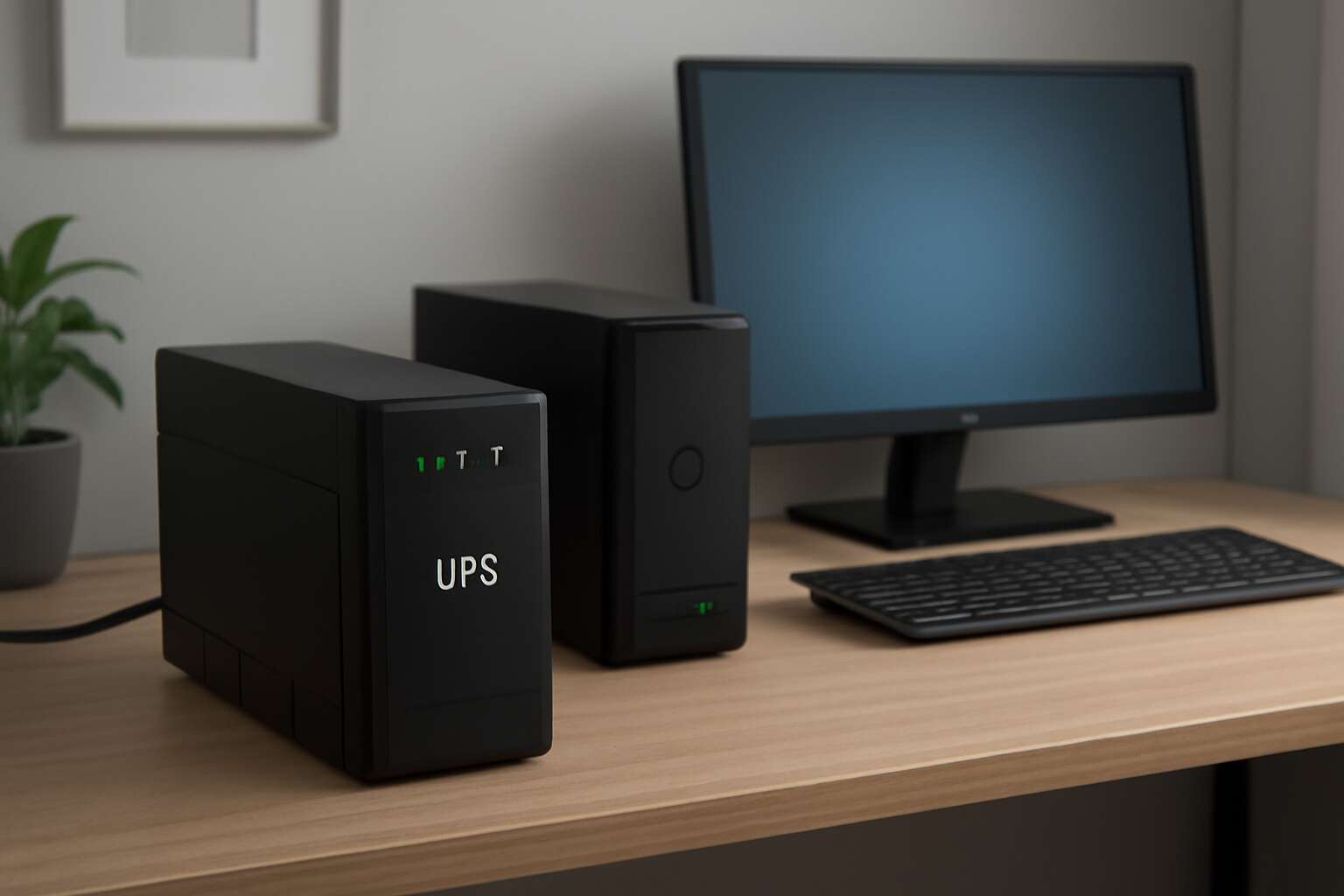
Understanding Battery Backup Systems
Definition and Purpose of Battery Backup
Power outages in South Africa are no punchline—they’re a real business risk. A recent SA study found that 28% of SMBs suffered outages that disrupted operations. In the world of protection, the term you’ll hear most is “battery backup vs ups”—a practical distinction rather than a glamorous acronym, designed to keep things humming when mains fail.
Understanding Battery Backup Systems means recognizing a storage-and-delivery approach that bridges gaps during outages. I’ve seen it in action, and trust me, it’s louder in intent than in volume! The purpose? Provide clean, reliable power long enough to save work, gracefully shut down or switch to an alternative supply, and shield critical equipment from surges. It’s a steady, unsung hero in the data center and the home office alike.
Key characteristics include:
- Energy storage (often lithium-ion or lead-acid)
- Automatic voltage regulation and smooth transfer to backup power
- Defined runtime to match your hardware and the expected outage length
How It Works: Power Path and Battery Discharge
In practical terms, understanding battery backup systems means watching power find its path. The Power Path is an unseen highway that toggles between mains and battery, keeping the load steady when voltage falters. When the grid stumbles, the system steps in with calm timing to protect data, devices, and operations from surges.
- Automatic transfer: once voltage dips, flow shifts from grid to stored energy without a blink.
- Voltage regulation: smooths spikes and sags so sensitive gear stays safe.
- Defined runtime: capacity and load align to buy just enough time.
Battery discharge is the deliberate release of stored energy into the circuit, guided by load, chemistry, and inverter efficiency. For teams weighing battery backup vs ups, the balance of runtime and protection becomes clearer. The rate of discharge and the remaining state of charge shape the actual runtime, letting critical equipment ride out the outage or transition to an alternate supply.
Common Types and Configurations
Power resilience isn’t a trend—it’s the quiet backbone of every operation. In the realm of battery backup vs ups, understanding the common types helps teams match protection to risk, whether protecting servers from a blip on the grid or keeping cash registers humming during load shedding.
Standby (offline) units spring to life on voltage sags, while line-interactive models add built-in regulation for steadier downstream power. Online, double-conversion systems deliver relentless cleanliness. Each type pairs with different battery chemistries and capacities, shaping how long critical gear can ride through an outage. In this battery backup vs ups landscape, configurations run from compact towers to rack-mount behemoths, with modular designs letting you grow as needs shift.
- Tower or rack-mount UPS for desk or cabinet deployments
- Modular architectures that scale runtime
- Integrated battery cabinets for extended outage protection
Typical Use Cases and Scenarios
Power isn’t merely electricity; it’s the quiet engine behind every decision. In South Africa, outages are a daily drumbeat, and how you back up power can decide whether a project stalls or sails.
In the realm of battery backup vs ups, use cases shape the choice: small offices guarding workstations and POS terminals, or data cabinets that ride out longer disruptions with modular scalability.
- Data centers and servers that must stay online during blips
- Retail and hospitality points‑of‑sale where uptime protects revenue
- Medical clinics and pharmacies relying on essential equipment
These scenarios, common across South Africa’s diverse landscapes, show how capacity and form factor meet real‑world needs, keeping essential gear humming through the grid’s moods.
Key Benefits and Limitations
Power is more than kilowatts; it’s the quiet agreement that keeps teams productive and servers awake. In South Africa’s grid moods, outages are a fact of life, so the choice between battery backup vs ups becomes less about drama and more about reliability. We’ve seen small offices and data cabinets glide through blips with poise—and larger operations shelter themselves with scalable peace of mind!
The key benefits are tangible: slips in power are absorbed without a hitch, and sensitive equipment keeps its cool. Yet limits exist—batteries age, temperature sensitivity bites, and initial costs deserve honest budgeting.
- Immediate load transfer reduces disruption and protects data integrity
- Modular growth lets capacity rise with demand
When weighing these trade-offs, the conversation isn’t about heroics; it’s about uptime you can trust even when the grid plays rough.
How to Size and Choose a System
Across South Africa, outages are a daily reality, with many businesses facing up to two hours of outages weekly. The decision between battery backup vs ups isn’t drama—it’s reliability dressed in practical terms. A well-sized system keeps teams productive and servers awake through the night’s quiet blips.
To size accurately, map critical loads, define desired runtimes, and take temperature into account for battery health. Consider future growth; modular paths save money while preserving uptime across departments.
Key sizing steps to guide selection:
- Evaluate peak versus continuous load
- Define minimum runtime during outages
- Plan for cooling and maintenance windows
With these considerations in hand, choose a system that scales and has reliable monitoring. The aim isn’t heroics, but predictable uptime when the grid shivers. In the end, it’s about resilience that keeps operations steady through the night—battery backup vs ups.
What a UPS Is and Why It Matters
UPS Basics and Core Functionality
In a country where load shedding shapes daily routines, a reliable power backup is a lifeline. What a UPS Is and Why It Matters becomes clear when a computer boots in darkness and a modem stays online.
UPS Basics and Core Functionality mean the device sits between mains and your gear for rural homes and small businesses, switching instantly to battery during a glitch and providing surge protection, noise filtering, and a safe shutdown path. In practical terms, this is the heart of the battery backup vs ups decision many South African homes face.
- Instant transfer to battery
- Voltage regulation and surge protection
- Graceful shutdown for data safety
Power Protection vs Back-up Runtime
Power outages drum through South Africa’s daily rhythm, turning mornings into tests of readiness. A UPS is more than a box on a shelf; it sits between mains and gear, waking a computer in darkness and keeping a modem online. In this landscape, battery backup vs ups carries weight.
Between protection and runtime, a UPS acts as a quiet sentry—damping surges, preserving power quality, and enabling a safe shutdown when the grid falters. The choice isn’t merely about staying online; it’s about safeguarding data, equipment, and the rhythm of work in rural homes and small businesses.
Resilience in South Africa hinges on balance—speed, power purity, and how long you can wait for the lights to return! A well-chosen unit becomes a quiet partner, turning chaos into continuity with quiet, precise grace.
Typical Configurations: Online, Offline, Line-Interactive
Power interruptions arrive with the cadence of a South African day—unannounced and costly. In the conversation around battery backup vs ups, a UPS is more than a box; it stands between mains and gear, cushioning surges and enabling a graceful shutdown when the grid falters.
What is a UPS? It’s a compact power path that conditions electricity and buys time for critical tasks, safeguarding data and protecting equipment.
Typical configurations include:
- Online (double-conversion) for pristine power and continuous uptime
- Offline (standby) for budget-conscious protection
- Line-Interactive for surge tolerance and efficiency
In a landscape where every watt matters, the UPS matters—quiet, reliable, and ready when the lights falter.
Efficiency, Heat, and Noise Considerations
Power is the quiet backbone of rural life and bustling offices. In the battery backup vs ups conversation, a UPS is more than a box—it’s a shield between the mains and your gear, buying seconds to save work when the grid falters. In South Africa, outages arrive unannounced; a UPS keeps the lights on where it matters most.
What a UPS is, at heart, is a compact power path that conditions electricity and buffers surges. It can be online, offline, or line-interactive, each with its own balance of protection and efficiency. I’ve watched clinics and homesteads rely on that calm energy when the night grows long.
Considerations—Efficiency, Heat, and Noise—shape daily use.
- Efficiency: energy conversion and standby losses affect running costs.
- Heat: inverter load and battery temperature drive cooling needs.
- Noise: fan speeds and topology determine whether the room stays quiet.
Choosing the right path blends practicality with comfort—the steady hum of reliable power in home and field.
Sizing for Home, Office, and IT Equipment
Power is the quiet architect of daily life, and in South Africa, outages leave their imprint on memory and schedule. A UPS is more than a box; it’s a guardian that conditions electricity, cushions surges, and buys precious seconds to save work when the grid falters. When weighing battery backup vs ups, the aim is continuity with grace. Online, offline, or line-interactive—each topology balances protection and efficiency.
Size and placement matter as much as the device itself. For home, compact form and quiet operation; for office, more devices and longer runtimes; for IT gear, clean power and scalable protection.
- Home: modest load, whisper-quiet operation
- Office/IT: larger loads and robust runtimes
Size is a quiet negotiation between wattage and runtime, cost and need. The best choice for home, office, and IT equipment respects the beauty of uninterrupted moments and the weight of power bills.
Maintenance and Testing Best Practices
Power outages are a quiet thief in South Africa, stealing plans and dinner times alike. A UPS acts as a patient guardian, smoothing voltage quirks and buying precious seconds to save work. In homes, offices, and data rooms, it’s not just a box—it’s a dependable friend you can trust when the grid falters.
What a UPS does goes beyond lighting a lamp in a storm. It conditions electricity, cushions surges, and keeps sensitive gear on a clean, stable path. The phrase battery backup vs ups captures a common debate, but the core idea remains simple: protection, reliability, and time to react.
Maintenance and testing aren’t afterthoughts; they are the routine that makes a UPS durable through years of South African outages. A light monthly self-check and an annual battery health review help keep surprises at bay, while firmware updates and proper ventilation preserve performance in hot rural summers.
Differences Between Common Power Backup Solutions
Definitions in Plain Language
Power outages in South Africa can wipe out a day’s momentum! The difference between common power backup options is often hidden in jargon, but the plain language matters. The phrase battery backup vs ups pops up in searches, yet the core idea is simple: one is a stored energy reserve, the other a complete device that protects and powers critical gear with clean energy.
A quick, plain-language contrast:
- Battery backup provides a stored energy reserve to ride out brief interruptions, typically for less critical loads.
- UPS—uninterruptible power supply—offers immediate transfer, built-in protection, and clean power for sensitive equipment.
- Selection hinges on load, runtime needs, and budget in SA contexts.
Understanding these distinctions helps homes, offices, and IT setups in South Africa choose a path that minimizes downtime and preserves productivity.
Protection Capabilities: Voltage, Outages, Surges
Power outages in SA aren’t rare— they’re daily crescendos that pause momentum. When you weigh battery backup vs ups, protection capabilities become the real decider, not glossy jargon. As one IT manager quips, ‘If the lights go out, the plan goes with them,’ and the moment has a way of revealing what truly protects your gear.
Here are the protection capabilities you care about:
- Voltage: Some units maintain a steady, clean output; others rely on buffering that may let sags slip through unless built-in line conditioning is present.
- Outages: Battery backup can bridge brief interruptions, but a true UPS ensures a seamless transfer with no momentary glitch.
- Surges: UPS designs often include robust surge protection and spike filtering; battery backups vary in this regard and may require additional protection in high-risk areas.
Load Handling and Runtime Planning
In SA, outages are part of the calendar. A recent industry survey found that roughly 60% of local businesses face at least one interruption every week. When considering battery backup vs ups, the choice hinges on load handling and runtime planning, not glossy jargon. The right path keeps your critical gear online and your team productive.
Load handling comes first. A true UPS delivers a seamless handoff, while some battery backups merely buffer and rely on downstream conditioning to clean the power.
- Seamless transfer vs buffering: essential for servers and network gear.
- Runtime targeting: determines how long you can stay online for core loads.
- Scalability: modular options let you expand for additional equipment without waste.
Different environments demand different balances, and the choice should reflect the exact mix of equipment and risk profile in your SA office or data room.
Cost of Ownership and ROI
In South Africa, outages are part of the calendar—roughly 60% of local businesses endure at least one interruption each week. When weighing battery backup vs ups, the cost of ownership and ROI matter more than glossy jargon. The right choice isn’t guesswork; it’s a math problem: upfront hardware, ongoing upkeep, and the price of downtime on a busy team. Size the plan to protect core loads and keep systems humming.
ROI shows up as smoother operations, fewer firefights, and preserved staff productivity. Costs break into upfront gear, installation, maintenance, and eventual battery refreshes. A modular path—start small for essentials, then grow as loads or risk rise—often yields the best balance for SA offices and data rooms. That’s the battery backup vs ups question in practice.
- Upfront costs vs ongoing expenses
- Battery refresh cycles
- Scalability without wasted capacity
- Maintenance contracts and serviceability
Lifecycle, Replacement, and Battery Health
In South Africa, outages are a daily drumbeat—roughly 60% of local businesses endure at least one interruption each week. When weighing battery backup vs ups, the decision hinges on lifecycle, replacement cadence, and battery health rather than glossy claims.
Battery health is the quiet factor that decides endurance. Signs of aging—faster discharge, higher heat, longer recharge—force a rethink before the lights go out. Below are the levers that shape the journey from installation to refresh:
- Lifecycle timing: how long a unit remains capable as loads expand
- Replacement cadence: availability of parts and swap cycles
- Battery health indicators: capacity fade, impedance growth, safe operating temps
We approach SA deployments with a steady hand, aware that reliability is a culture, not a one-off upgrade.
Ideal Environments for Each Solution
South Africa’s daily power drumbeat scars the horizon, and the debate between battery backup vs ups becomes a study in temperament as much as tech. It’s not about glittering claims but about response time, power conditioning, and endurance as loads drift through the outage. Each solution wears its own silhouette: quick, lean protection or steady, refined control.
Ideal environments for each shine:
- Small offices and home workspaces seeking simple, quiet protection
- IT rooms or server closets requiring clean power and reliable runtimes
- Remote sites where ongoing maintenance is limited and parts availability matters
In SA deployments, reliability is a culture, not a one-off upgrade. The right fit becomes a quiet partner in the office, not a hero in the room, shaping ongoing deployment rhythm and trust.
How to Choose the Right Power Backup Solution for Your Needs
Assess Your Power Reliability and Critical Loads
Power is the quiet engine behind every decision—especially in a country where grid reliability toggles with the weather! Understanding battery backup vs ups can illuminate the path from theory to practice, turning looming outages into manageable moments rather than calamity. In this sense, your equipment’s heartbeat matters as much as the plug that feeds it.
Assess Your Power Reliability and Critical Loads to map where outages bite hardest—and which devices must keep running when Eskom falters. In South Africa, the distinction between a phantom voltage dip and a true blackout matters for devices, networks, and people who depend on them. The right choice balances protection with practical runtime, noise, and footprint.
Consider these broad factors as you weigh options:
- Critical loads and uptime tolerance
- Environmental fit: space, heat, and placement
- Maintenance accessibility and local support
- Future growth and scalability
Evaluate Runtime Needs and Load Calculator
Power reliability is a secret business partner, especially in South Africa where outages reshape days. When you weigh battery backup vs ups, you’re not choosing a gadget—you’re choosing resilience. A well-sized solution turns a nerve-wracking disruption into a mere heartbeat in the night, keeping essential systems alive without turning the office into a power-chasing theatre!
To tailor the answer, evaluate runtime needs and run a load calculator. Consider these factors:
- Uptime tolerance
- Critical loads and networks
- Space, heat, and placement
- Maintenance accessibility and local support
- Future growth and scalability
Together, these insights reveal how your environment and obligations shape the best match for your needs, guiding a balanced choice between protection and practical runtime.
Budget, Financing, and Total Cost of Ownership
Power outages cost SA businesses billions annually, turning a quiet night into a nerve-wracking thriller. When you weigh battery backup vs ups, you’re choosing continuity—resilience you feel as soon as the lights flicker and your servers hum back to life.
From my experience in SA, budget isn’t just the sticker price; it’s a plan that includes financing, maintenance, and eventual battery replacement. Region-specific service and spare parts can swing costs as much as the hardware itself.
- Upfront purchase price and financing options
- Maintenance and local service levels
- Battery life, replacement cycles, and disposal
A clear TCO view helps compare options and avoid surprises when capacity needs grow. Evaluating this choice from a total cost perspective keeps future-proofing aligned with budget reality.
Scalability, Modularity, and Future Growth
Power instability costs South African businesses billions each year, turning a flicker into a cliffhanger for operations. The choice between battery backup vs ups isn’t merely technical—it’s about continuity, how quickly systems restore, and how many minutes of downtime you can absorb before the ripple effect hits customers and cash flow.
Scalability and modularity matter because growth rarely follows a straight line. A capable solution should expand with demand, and you should be able to add or swap modules without a complete overhaul. Look for smooth integration with existing IT, simple remote monitoring, and reliable local support to keep maintenance predictable.
- Expandability without downtime as loads rise
- Modular design that allows swapping or adding units
- Regional service networks and spare-part availability
Future growth requires planning that aligns with South Africa’s energy reality—grid reliability, load shedding patterns, and procurement cycles. The right approach keeps options open as technology and outages evolve, without locking in an inflexible path.
Installation Space, Ventilation, and Safety
South Africa’s power instability costs businesses billions each year, with outages turning a flicker into a cliffhanger for operations. The choice between battery backup vs ups isn’t just a spec decision—it’s about where protection lives, how quickly systems resume, and how much downtime you can absorb.
Installation space matters. Map footprint, ceiling clearance, and easy access for service. Consider a modular footprint that fits cabinets and avoids crowding heat sources.
- Footprint and clearance for airflow
- Front-panel access and maintenance paths
- Compatibility with existing racks and cabinets
Ventilation and safety cannot be afterthoughts—hot modules degrade life and performance. Place units in well-ventilated rooms, away from flammable materials, with clear paths for inspection and safe cable routing.
Finally, ensure your choice aligns with South Africa’s procurement cycles and regional service networks, so growth and outages are manageable without a rigid path.
Warranty, Support, and Vendor Reputation
Power reliability in South Africa isn’t a luxury—it’s a business imperative, with outages costing companies billions as every flicker becomes a deadline. When weighing battery backup vs ups, the decision becomes more than a spec—it’s a covenant to quick recovery, predictable downtime, and real service continuity. Warranty, support, and vendor reputation anchor that promise beyond glossy charts.
Warranty, support, and vendor reputation anchor that promise. Key criteria:
- Warranty depth and battery coverage tailored to SA operating conditions
- Regional service networks and responsive on-site support
- Vendor stability, spare-part availability, and a clear roadmap for upgrades
Practical Guide to Buying, Setting Up, and Maintaining
Where to Buy: Reputable Vendors and Certifications
Power is the quiet conductor of progress, and in South Africa’s dynamic markets outages aren’t mere interruptions—they shape decisions. When choosing a backup solution, the question isn’t only capacity but provenance, pedigree, and aftercare.
Buying from reputable vendors with recognized certifications ensures reliability and serviceability. Seek local warranties, accessible support networks, and verifiable test results from accredited labs. In practice, this means vendor documents that survive an audit, not glossy brochures alone.
- SABS/IEC certification for electrical safety
- SANAS accreditation for testing and calibration
- ISO 9001 quality management and a clear maintenance policy
- National service footprint and parts availability in major SA regions
For the practical comparison of battery backup vs ups, verify installation manuals, training for staff, and clear runtime expectations. Confirm local compliance, energy efficiency ratings, and easy access to genuine batteries and replacement parts to keep systems healthy and accurate.
Key Specifications to Review (Power Rating, Run-Time, Efficiency)
Power is the quiet conductor of progress, and in South Africa’s power-hungry markets outages test more than equipment—they test trust. A practical buying lens focuses on three core specs: power rating, run-time, and efficiency. When weighing battery backup vs ups, the balance isn’t merely about capacity; it’s about whether the system can shoulder critical loads with grace while the lights fade. In other words, resilience sits in the details.
Consider these specs:
- Power rating: the maximum sustained load the unit can safely support without straining.
- Run-time: how long the system can keep essential equipment alive at the chosen load.
- Efficiency: energy converted to useful work vs energy wasted as heat, with long-term operating costs in view.
With a focus on trusted certifications and a solid maintenance philosophy, the right choice endures through load shedding and peak demand—even in rural communities where reliable power feels like a lifeline.
Installation Tips and Safety Considerations
Across South Africa, outages punctuate daily life like a drumbeat in a restless city. Two-thirds report interruptions each week, turning reliability into a nonnegotiable asset. The choice between battery backup vs ups isn’t merely about capacity—it’s a pledge to protect what matters when the lights fade.
Ask three questions: where will you place the unit, which loads must endure, and how will you maintain it? Prioritize certified products, thoughtful ventilation, and safe battery handling. A setup that breathes with your space—quiet, neat, resilient—stays trusted for years.
- Certified installers and local compliance
- Ventilation and clearance around the cabinet
- Regular maintenance cadence and battery health awareness
Safety considerations soften risk: effective surge protection, clear shutoff paths, and daylight testing to verify readiness without drama.
Energy Efficiency, Noise, and Footprint
In South Africa, outages are a drumbeat you can’t ignore. About two-thirds of households report interruptions each week, making reliability a non-negotiable asset. A system’s value goes beyond capacity—it’s protection for moments when the grid falters. When weighing battery backup vs ups, focus on runtime, noise, and how the unit blends with your space.
- Local certifications and reputable service networks provide confidence
- Airflow and heat management keep cabinets from becoming a heat trap
- Battery health awareness supports long-term performance
Practical setup balances energy efficiency with a respectful footprint. Look for modular units that fit your space without crowding it, and expect a subdued hum rather than a tolling engine. Quiet operation becomes part of the room’s character, not a distraction.
In the long arc of outages, the right choice feels almost prophetic—a source that breathes with your life and never shouts in the room.
Maintenance, Testing, and Replacement Scheduling
In a climate where outages ride shotgun on daily life, buying the right system is less about bragging rights and more about steady hands and quiet corners. When weighing battery backup vs ups, focus on runtime, integration, and how the unit sits in your space, not just the label.
- A load profile that includes essential devices and their peak draw informs realistic runtimes
- Space, cooling, and noise characteristics guide cabinet size and placement
- A service plan with a reputable vendor for installation, testing, and eventual component replacement is advisable
Maintenance is a rhythm, not a chore—schedule quarterly checks, yearly full tests, and battery health reviews aligned with manufacturer guidelines. A well-planned program keeps the batteries singing through the next South African blackout, quietly, and with confidence.
End-of-Life and Recycling Options
“Power outages are not a matter of if, but when,” a facilities manager likes to say. That blunt truth informs a practical guide to Buying, Setting Up, and Maintaining End-of-Life and Recycling Options. When weighing battery backup vs ups, treat the lifecycle with as much care as the spec sheet—so you power through the next South African blackout with quiet confidence.
- Take-back programs from reputable vendors to handle recycling responsibly.
- South Africa–compliant e-waste recycling and refurbishing channels.
- Clear battery disposal documentation that travels with the unit into the next life stage.
Choose partners who publish transparent end-of-life policies and verify compliance with local regulations. The right recycling mindset protects the environment and keeps your data-laden hardware out of landfills, letting your system remain future-ready rather than landfill fodder.



0 Comments