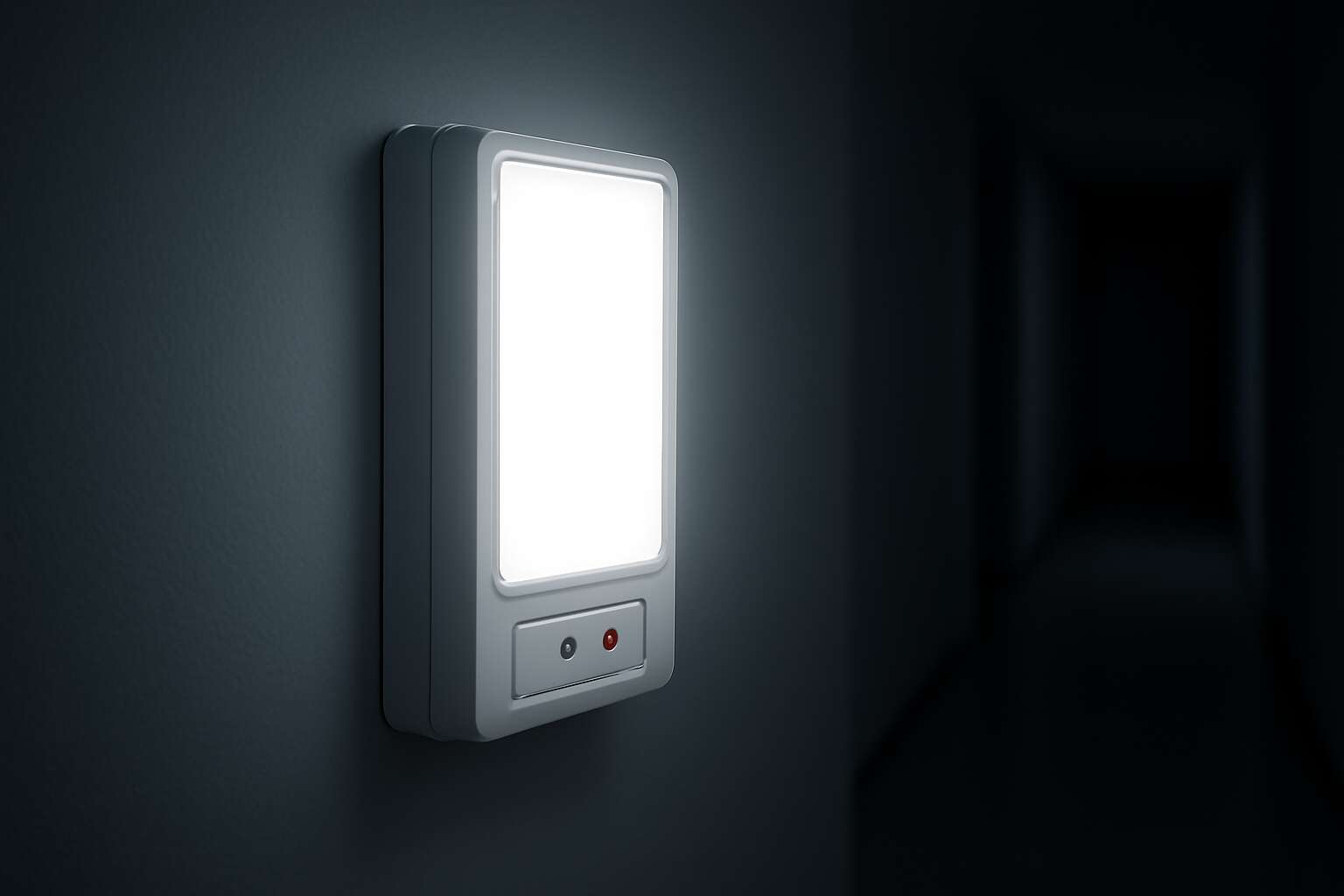
Understanding Battery-Backed Emergency Lighting
How battery-backed lights operate
In South Africa, outages can catch facilities off guard, turning a calm corridor into a testing ground. Understanding battery backup emergency lights begins with a simple truth: these devices store energy and release it to illuminate egress routes when mains power fails, keeping stairwells and exits visible when it matters most.
They operate via a compact triad: a rechargeable battery, a charging circuit, and a smart control unit that automatically switches to battery power at the first sign of the grid’s weakness. The result is seamless, reliable lighting that guides people safely to the door—no sudden darkness, no shadows of doubt!
- Rechargeable battery pack
- Charging and monitoring circuit
- LED lamp with exit-sign integration
Installations in South Africa benefit from standards that balance efficiency with durability, ensuring longevity under heat and dust. Quiet, vigilant, these lights train the eye to the path ahead even when the world outside goes dim.
Key components of emergency lighting systems
Outages cast a long shadow across South African facilities, yet reliable lighting holds the line. A recent view from facilities managers shows clear exit paths can spell the difference in the first moments after power fails. This is where battery backup emergency lights prove their worth—they carry light forward when mains fade away.
These systems hinge on three core pillars that work in harmony to keep paths visible and minds at ease.
- Energy reserve: a dependable battery that stores enough charge to illuminate egress routes for the needed duration
- Power management: intelligent charging and control logic that senses grid weakness and switches modes seamlessly
- Signage and illumination: LED lighting integrated with exit signs for unambiguous wayfinding
In South Africa, installations follow standards that balance efficiency with heat and dust tolerance, ensuring longevity and quiet durability. When corridors grow dim, these lights stand ready, guiding footsteps toward safety with a calm, confident glow.
Maintained vs non-maintained options explained
Outages cast a long shadow over facilities, but the right lighting keeps corridors clear. In South Africa, a dependable exit path can be the difference between panic and orderly flow in moments after power fails. Battery backup emergency lights fuse steady illumination with safety, carrying light forward when mains fade away.
Maintained versus non-maintained options shape how these systems behave day to day. Maintained units stay lit for staff and patrons, every minute of every day. Non-maintained units stay dark during normal power and only spring to life on outage, saving energy and reducing heat load.
- Maintained: constant visibility for all occupancy levels.
- Non-maintained: energy savings with conditional illumination.
- Both: regular testing and battery health checks are essential.
Importance of battery backup for safety and reliability
Power outages are a daily reality in South Africa, turning corridors into chaos in seconds. When the mains fail, a clearly lit exit path becomes a lifeline. Battery backup emergency lights keep key routes visible, carrying light forward when the grid fades away.
These systems marry reliability with simple upkeep. The term ‘battery backup emergency lights’ describes this essential system. In busy facilities, you gain constant visibility where it matters most and meet local safety standards without wasting energy during normal operation. You are ready to illuminate the moment power dips, preserving wayfinding and evacuation clarity.
- Reliability during outages
- Compliance with safety standards
- Energy efficiency and lower heat load
That balance makes battery backup emergency lights a vital part of South Africa’s safety fabric.
Standards, Codes, and Compliance
NFPA 101 and IBC requirements for emergency lighting
When the power falters, standards don’t blink. NFPA 101 and the IBC demand emergency lighting that activates automatically and carries you to safety along every exit path, even when mains supply collapses.
These codes require that lighting remains in operation for a practical duration—typically 90 minutes—with floor-level visibility around 1 foot-candle along the means of egress. In South Africa, local authorities commonly align with these international benchmarks, guiding the design, installation, and inspection of battery backup emergency lights to ensure resilience under duress.
- Automatic illumination on power loss
- Minimum duration of 90 minutes of illumination
- Regular testing and maintenance to assure battery health
Beyond compliance, the real measure is how illumination shapes perception, reduces panic, and quietly anchors people as they move toward safety—a steady, unassuming guide in the dark.
Local code considerations and permit processes
When the lights falter, compliance isn’t optional—it’s a lifeline. South Africa’s authorities largely mirror international benchmarks, guiding the design, installation, and inspection of essential power protection. In practice, this means a clear trail of permits, documentation, and credible proof that systems—especially the terms we know as battery backup emergency lights—will perform when mains falter.
Here are the typical permit steps you’ll navigate:
- Plan approval with the local building control or municipality
- Electrical installation permit and a Certificate of Compliance (COC) before energising the system
- Commissioning tests and final sign-off by the relevant fire and building authorities
Post-approval, ongoing maintenance, scheduled inspections, and transparent record-keeping are the real guardians of safety. Local code authorities stress traceable testing, proper documentation, and timely remedies when systems drift from spec—ensuring readiness across every egress path.
Testing and inspection schedules you should follow
When the mains fail, every second counts. “Backup lighting is a lifeline,” a safety manager puts it. Battery backup emergency lights are more than a feature—they’re a safety promise that keeps exit paths visible. In South Africa, these systems must meet strict standards and pass formal checks before energising. They’re designed to perform when you need them most, not during a quiet moment in the night.
Standards and codes shape how we design, test, and verify these systems. Local authorities align with international norms, demanding clear documentation, traceable testing, and regular inspections as proof of readiness.
- Monthly functional tests of the backup lighting units
- Periodic endurance tests and battery health checks
- Annual or semi-annual third-party inspections
- Comprehensive record-keeping and certificate validation
Maintaining a robust log ensures readiness across every egress path and aligns with local authorities’ expectations.
Warranty, reliability, and life-cycle expectations
Lights failing during a building’s critical moments carry a heavy weight—every second counts. In South Africa, safety audits reveal that 78% of sites struggle with complete documentation for emergency lighting. Standards dictate warranty, reliability, and lifecycle expectations that keep exit routes illuminated. Battery backup emergency lights are more than components; they’re commitments to safety.
To frame durability, consider these pillars:
- Warranty coverage and service scope
- Reliability metrics and maintenance windows
- Battery replacement cycles and end-of-life criteria
From a lifecycle perspective, manufacturers validate readiness through certification trails and traceable testing, ensuring that battery backup emergency lights perform when they’re needed most and that the promise endures years into the building’s story.
Product Types and Technology
Battery chemistries: NiCd vs NiMH vs Li-ion
Some call it the quiet guardian: light that never falters when the mains vanish. In the realm of battery backup emergency lights, three chemistries lead the dance. NiCd batteries are rugged and respond quickly, ideal for challenging SA environments, though memory effects can shorten their lifecycle. NiMH offers higher capacity with lighter weight and better disposal, yet it self-discharges in heat and needs mindful charging. Li-ion brings the most energy per gram and the longest life, but demands robust protection and careful thermal management.
- NiCd: fast recharge and rugged reliability; watch memory effects.
- NiMH: higher energy, lighter packs; higher self-discharge in heat.
- Li-ion: top energy density; needs protection and thermal care.
Choosing a chemistry is a balance of budget, climate, and duty cycle, ensuring a reliable glow when the building most needs it.
Lighting tech: LED versus traditional lamps
Across South Africa, outages have become a nightly reality, with commercial districts averaging upwards of an hour without power last year. When the mains falter, product types and lighting technology converge to keep spaces safe and navigable. In the world of battery backup emergency lights, you’ll find fixed ceiling and wall-mounted units that sip power from an internal pack, as well as portable, self-contained options for temporary coverage. These form factors let installers tailor coverage to corridors, stairs, and exits.
- Ceiling-mounted, fixed units for broad coverage
- Wall-mounted escape lights to guide egress
- Portable, self-contained options for rapid deployment
Lighting technology leans toward LEDs in modern systems—tiny diodes, big return. LEDs deliver instant brightness, longer lifespans, and cooler operation, cutting heat and maintenance. Traditional lamps, like incandescent or fluorescent, trade energy efficiency for familiar warmth and lower upfront cost but demand more from the battery and ballast as cycles accumulate. LEDs also pair well with smart charging and thermal management to stretch life in SA’s varying climates.
In practice, the choice blends coverage needs with the reliability demanded by busy environments, ensuring the landscape of light remains unbroken even when the grid yawns. The magic lies in the marriage of form factor and photon technology, turning everyday corridors into safe passages.
Integral battery packs vs remote battery backup units
When the grid yawns, resilience rises. In the realm of battery backup emergency lights, two architectures steer the night: integral battery packs and remote battery backup units. The former hides its heart inside the fixture; the latter tethers a central power bank to a constellation of luminaires, offering scalable coverage with fewer internal components.
- Integral battery packs are compact, with simplified wiring and quicker installation; maintenance stays near the fixture.
- Remote battery backup units centralize a power bank, delivering longer run times and scalable coverage for long corridors and stairwells.
Across South Africa’s varied sites, the choice blends deployment speed with scalable protection, ensuring safe passages stay radiant even as the grid slumbers.
Application-focused pros and cons for commercial and industrial spaces
Light is the quiet guardian of safety, and in South Africa’s bustling workspaces outages sharpen its importance. The choice between product types sets the tempo of resilience, dictating how quickly spaces regain visibility when the grid yawns.
Two architectures steer the night: integral battery packs and remote battery backup units. Integral packs hide the heart inside the fixture, delivering a swift, uncomplicated install. Remote units tether a central power bank to a constellation of luminaires, enabling longer run times and scalable coverage.
- Integral battery packs: compact, easy install; maintenance near the fixture.
- Remote units: scalable coverage; longer runtimes; centralized service.
For commercial and industrial spaces, application matters more than label. Where corridors stretch, remote systems shine; where fixtures cluster, integral packs keep wiring neat and costs lean. Across applications, battery backup emergency lights ensure continued visibility during outages.
Energy efficiency and environmental impact considerations
Outages in South Africa are a daily reality, and lighting that stays alive matters more than ever. For battery backup emergency lights, the choice of product type shapes energy use and the environmental footprint. Integral packs keep the heart in the fixture, while remote banks spread reach and reduce run-time strain on any single unit. In tight corridors, compact designs shine; in long aisles, scalable systems save wiring and future-proof coverage.
Energy efficiency comes from LEDs, drivers, and smart controls that trim draw during normal operation and cap recharge losses after outages. Environmental impact hinges on materials, lifecycle, and end-of-life handling; look for vendors with recyclable packaging, modular components, and take-back programs in SA. The overall effect is a cleaner footprint across the built environment. That means battery backup emergency lights reduce downtime and boost safety.
Installation, Testing, and Maintenance Best Practices
Site survey, mounting, and enclosure considerations
A blackout is not the time to improvise. “In a blackout, every second counts,” a facilities manager once told me, and that mindset guides installation for battery backup emergency lights. Start with a site survey: map exits, note ceiling heights, and identify mounting zones that won’t obstruct egress or service in South Africa.
Mounting and enclosure choices are as critical as the unit itself. Secure mounting guards against movement; protect enclosures from dust and moisture, and plan cable routes for accessibility. Consider the local climate and tamper resistance to keep lighting reliable.
- Ceiling vs wall mounting based on traffic
- Enclosure rating and service accessibility
- Cable management and future upgrades
Testing and maintenance should be baked into the routine: functional tests, battery exercise, and result logging. Regular checks of wiring, seals, and battery packs keep battery backup emergency lights ready when needed.
Wiring, circuits, and surge protection basics
‘In a blackout, every second counts,’ a facilities manager once told me. Across South Africa, that truth sharpens the blade of installation: your battery backup emergency lights must rise without hesitation, silent, steadfast, and ready to lead the way when the grid yawns shut.
Installation hinges on clean wiring, dedicated circuits, and surge protection that breathes with the building’s heart. Enclosures should resist dust and moisture, and cables must be routable for service.
- Isolate circuits and label cables clearly
- Mount on solid surfaces with tamper-resistant fasteners
- Route cables to accessible junctions for future upgrades
Testing and maintenance should be baked into routines: functional checks, periodic battery exercise, and meticulous result logging. Regular inspections of wiring, seals, and packs keep the lights ready in SA’s climate, where heat and humidity test resilience.
Battery maintenance, replacement intervals, and disposal
Installation, testing, and maintenance of battery backup emergency lights is a living covenant with safety. In South Africa’s heat and humidity, the system must rise with quiet authority when the grid falters. These lights aren’t decorative—they’re the first, silent responders in a world that tests us when the power goes out.
Battery health hinges on consistent service, temperature exposure, and honest charging cycles. Maintenance means periodic checks of containment integrity, seals, and pack status, with records kept for audits. Replacement intervals are guided by the battery chemistry, usage pattern, and local regulations; there is no one-size-fits-all timetable.
- Manufacturer guidance and local code compliance
- Temperature and humidity considerations
- End-of-life recycling and disposal requirements
Disposal, like performance, must be responsible: recycle through approved channels and never dispose of battery waste with general waste. Retirements of battery backup emergency lights should be logged as part of a broader asset lifecycle, ensuring traceability for audits and future upgrades.
Testing protocols: monthly functional tests and annual duration tests
In South Africa’s blistering summers, a reliable installation is more than wiring—it’s trust. The operation of battery backup emergency lights demands steady care, and testing cadence is the quiet heartbeat of safety. Monthly functional tests confirm lights flash, batteries connect, and the system responds when power falters. For full endurance, annual duration tests push the pack through the real emergency run, verifying the expected runtime and the health of the chemistry.
Best practices include these checks:
- Monthly functional tests verify lamp activation, illumination levels, and solid battery connections.
- Annual duration tests discharge the pack to its rated runtime, recording performance and any deviations.
Keep a log of every test, schedule maintenance with site teams, and document any action taken to support audits and ongoing reliability.
Record-keeping and documentation for audits
Safety is a story written in records, and in South Africa’s heat-scorched workplaces a single missing file can redraw the line between calm and crisis. Readiness begins long before the first switch, with a quiet confidence built in documentation.
Installation discipline sets the stage. Durable mounting, accessible enclosures, and clean cabling form a backbone that withstands the tests of time and heat. The phrase battery backup emergency lights should be anchored to a traceable record—where each unit’s model, location, and serial are captured for audits.
- Installation context and environment (location, rating)
- Component IDs and supplier data
- Audit-ready documentation (certs, warranties, test records)
Maintenance and historical records turn upkeep into a narrative of reliability. Regular logs, coordinated communication with site teams, and preserved action notes ensure transparency when auditors arrive.


0 Comments