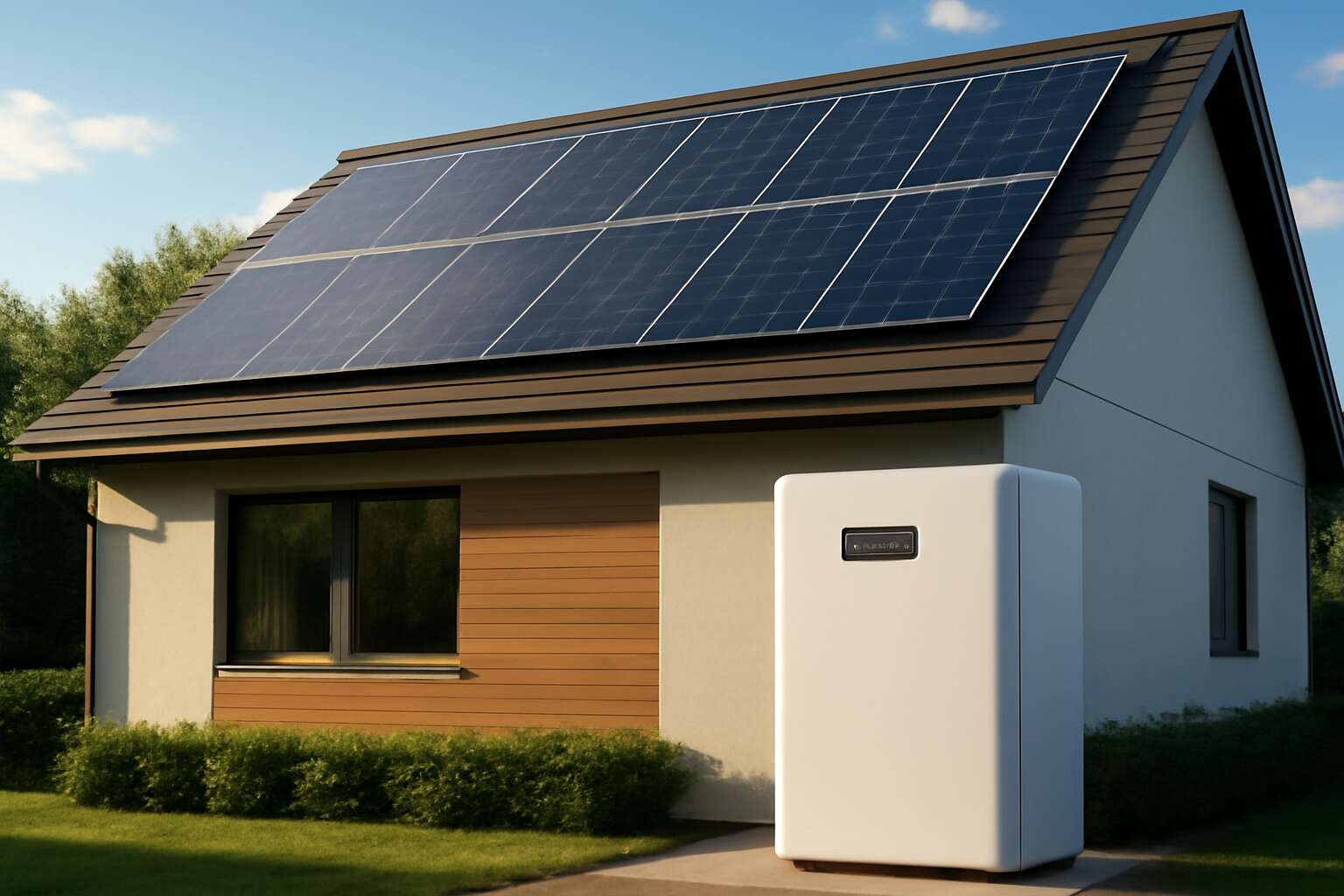
Overview and key benefits of solar energy with storage
What is solar energy with storage and why it matters
Sunlight has a way of rewriting the day. Solar power with battery backup isn’t just a green choice; it’s a quiet safeguard against the erratic rhythm of the grid. In South Africa, outages punctuate life, and a well-sized system keeps essentials alive and evening routines unbroken.
Here’s how it unfolds: solar energy with storage captures daylight, stores it for use after dusk, and delivers power when the grid is shy.
- Reliability during outages
- Price stability and long-term savings
- Cleaner energy and greater independence
Solar energy with storage is more than technology—it’s a practical pillar for homes and businesses, turning daytime sunshine into night-time power and buffering against grid disruptions. Solar power with battery backup demonstrates how storage converts sun into steady energy, a quiet partner in daily life.
How battery backup enhances daytime and nighttime power
In a country where the grid can blink, daylight becomes a practical asset. South Africa bathes in sun and storage tech is turning that gift into steady power. This is solar power with battery backup in action, translating daytime brightness into reliable night-time energy.
Overview and key benefits unfold as storage sweetens daily life. Three clear advantages:
- Uninterrupted daytime power for essential loads
- Predictable nighttime operation for lighting and devices
- Scalable energy that adapts to tariff shifts
During sun, the battery charges while panels harvest. After sunset, stored energy keeps the fridge, router, and security systems humming. The result is steadier power, less anxious evenings, and a quieter, more resilient home. This is solar power with battery backup, turning sun into a reliable rhythm.
In South Africa, this approach blends practicality with aspiration—a dependable partner for households and businesses alike.
Top benefits: resilience, savings, and independence
In SA’s sunlit mornings, households enjoy around 2,500 hours of peak sun each year—enough to turn daylight into dependable energy. This solar power with battery backup translates that bright potential into a reliable daily rhythm you can count on, no matter the weather.
Three clear advantages anchor this approach.
- Resilience during outages
- Savings on electricity bills
- Independence from grid fluctuations
Daytime, the panels and the storage duet hum, charging steadily as the house basks in light. After sunset, stored energy keeps the fridge, router, and lights humming, offering comfort and calm.
In South Africa, this blend of practicality and aspiration stands as a dependable partner for homes and businesses, turning sun into a reliable rhythm with solar power with battery backup that endures beyond the day’s heat.
Common use cases and decision criteria
South Africa basks in roughly 2,500 hours of peak sun each year, a solar heartbeat that can transform daylight into dependable power. Solar power with battery backup turns that radiant potential into a daily rhythm you can rely on, rain or shine.
Overview and key benefits unfold like a well-told saga: steady resilience when outages loom, budget-friendly electricity, and a solar power with battery backup that keeps daily routines intact.
Common use cases introduce the practical map:
- Residential rooftops powering homes with minimal interruption
- Small businesses and clinics that need reliable daytime and nighttime supply
- Remote farms or campuses where grid access isn’t always assured
Decision criteria to guide the journey:
- System size and expected daily load
- Storage capacity and discharge duration
- Battery chemistry, warranty, and service network
- Local incentives, financing options, and maintenance needs
System architecture and core components
Solar panels, inverters, and charge controllers explained
“Sunlight is free; the challenge is storing it for the night,” a guiding line for every solar journey. In sunny South Africa, a well‑planned solar power with battery backup system turns daylight into a dependable heartbeat for your home.
The architecture hinges on three core players: solar panels, an inverter, and a charge controller—each with a precise job that keeps energy moving smoothly from sun to socket.
- Solar panels capture photons and generate DC electricity.
- Inverters convert DC to AC for household appliances and the grid.
- Charge controllers regulate battery charging and protect against overcharging or deep discharge.
With this trio, the system offers resilience, steady power, and the promise of independence—hallmarks of solar power with battery backup.
Types of storage batteries and their pros and cons
“Sunlight is free; the challenge is storing it for the night,” a maxim guiding solar journeys in sunny South Africa. In a solar power with battery backup setup, three core players—solar panels, an inverter, and a charge controller—keep daytime energy moving toward night, while a battery bank stores the surplus for reserve.
Choosing storage hinges on the battery types and their pros and cons:
- Lithium‑ion: high energy density and long life, but higher upfront cost and temperature management needed.
- Lead‑acid (sealed): economical upfront, simple to install, but heavier and shorter cycle life.
- Flow batteries: scalable capacity and long life, yet more complex and costly to implement.
Ultimately, a well‑matched battery system balances space, climate, and maintenance, turning daylight into a steady heartbeat after sunset—exactly what solar power with battery backup promises for SA homes!
Battery management, safety, and longevity
Power resilience is no longer a luxury; it’s the new normal in SA homes, where outages punctuate daily life. The system architecture centers the battery bank, protected by a vigilant battery management system that tracks temperature, charge, and cell balance, delivering solar power with battery backup.
- Battery management system monitors voltage, temperature, and cycling
- Safety protocols for enclosure, venting, and fault alerts
- Longevity practices through thermal control and routine maintenance
In practice, energy flows from the solar array to the charge controller, then into storage and the inverter, delivering reliable after-dark power and turning daylight into a steady heartbeat for SA homes.
Designing for proper system sizing and performance
Across SA, outages rose 22% last year, turning resilience from luxury to baseline. System architecture for solar power with battery backup centers on a solid battery bank, guarded by a vigilant battery management system (BMS) that tracks temperature, voltage, and cell balance. This isn’t gadgetry; it’s a lifeline I’ve witnessed turning daylight into a steady heartbeat after dark.
- Battery bank and BMS integration
- Inverter and automatic transfer logic
- Charge controller and energy routing
- Monitoring, safety enclosure, and fault alarms
Designing for proper system sizing and performance means attuning capacity to demand and the sun’s rhythm. The balance among the array, storage, and inverter ensures reliable power after dark, without drama—a practical embodiment of solar power with battery backup.
Grid-tied vs off-grid vs hybrid configurations
Across South Africa, outages climbed 22% last year, and resilience has become the new baseline. Solar power with battery backup shapes the architecture of daily life, turning daylight into a steady heartbeat after dark with intention and care. I’ve watched these systems turn silence into security!
Grid-tied, off-grid, and hybrid configurations each offer a distinct balance of generation, storage, and intelligent switching. They decide how energy travels: from panels to the inverter, through the balance of system, and into the home or, when convenient, back to the grid.
- Grid-tied with on-site storage and utility interconnection
- Off-grid with autonomous storage and islanding capability
- Hybrid configurations blending grid access with storage and seamless transfer
Whether perched on a rooftop or tucked into a hillside, the architecture maps a future where sunshine and reliability walk hand in hand.
Costs, financing, and incentives
Upfront costs and installation considerations
Electricity costs keep climbing and outages break routines—solar power with battery backup offers a practical hedge! Upfront costs hinge on system size, battery capacity, and installation specifics. A thoughtful plan also weighs roof orientation, shading, wiring needs, and permit requirements, all of which shape final pricing and uptime.
- System size and battery capacity
- Roof condition, shading, and mounting
- Electrical work and grid interconnection permits
- Warranty, maintenance, and monitoring costs
Financing options and incentives can tip the balance. Look for cash purchases, hardware loans, or service agreements that bundle hardware with ongoing support. Government and municipal programs may offer rebates or credits; check local schemes for possible savings on your investment.
Estimating savings and ROI over time
Sun-powered economics have a cadence all their own. In South Africa, electricity tariffs have climbed year after year, and yet solar power with battery backup promises a steadier rhythm—a hedge that turns sunlight into savings and outages into distant echoes.
Estimating savings hinges on how you size storage and how you use energy, but the payoff can be measured in more than rand: shorter payback, higher self-consumption, and a calmer budget as demand charges ease. Financing options and incentives can tip the balance, softening upfront costs and accelerating ROI.
- Cash purchases
- Hardware loans that bundle installation and monitoring
- Service agreements offering ongoing support and system health checks
Over time, the sun’s ledger becomes a personal one—an enduring dividend that pairs financial sense with peace of mind.
Incentives, rebates, and tax credits
Across South Africa, solar power with battery backup now costs less per kilowatt-hour than climbing electricity tariffs—a quiet revolution you can feel on your monthly bill. The price tag includes panels, inverters, and the battery bank, plus installation and warranties. When sized wisely, the long payoff whispers louder than the upfront cost.
Financing options can shift the timeline from dream to daily habit. A cash purchase minimizes interest; hardware loans bundling installation and monitoring; service agreements offering ongoing support and system health checks.
- Cash purchases
- Hardware loans bundling installation and monitoring
- Service agreements offering ongoing support
Incentives, rebates, and tax credits can tip the balance. In South Africa, VAT relief on solar gear, municipal rebates, and energy-efficiency incentives help soften the cost, aligning resilience with a calmer budget.
Financing options, leases, and power purchase agreements
A quiet revolution is under way: solar power with battery backup now costs less per kilowatt-hour than climbing electricity tariffs, reshaping the monthly bill for South African homes and businesses.
Costs can be managed with flexible financing. Cash upfront avoids interest, while hardware loans bundle installation and monitoring. Service plans add ongoing care and system health checks, keeping performance steady as tariffs drift.
- Leases that place ongoing maintenance with the provider
- Power Purchase Agreements (PPAs) with fixed rates for a defined term
- Hybrid ownership options blending upfront payment with predictable monthly costs
Incentives in South Africa soften the sticker price through VAT relief on solar gear, municipal rebates, and energy-efficiency programs, aligning resilience with a calmer budget.
Total cost of ownership and depreciation
A quiet revolution is under way: solar power with battery backup now costs less per kilowatt-hour than climbing electricity tariffs, reshaping the monthly bill for South African homes and businesses.
Costs hinge on the kit and its fit to your needs. Total cost of ownership covers upfront spend, financing, and ongoing maintenance. Flexibility matters: cash upfront avoids interest; hardware loans bundle installation and monitoring; service plans keep your system healthy.
- Cash upfront to eliminate interest
- Hardware loans bundle installation and monitoring
- Service plans that cover ongoing care
Incentives soften the sticker price. VAT relief on solar gear, municipal rebates, and energy-efficiency programs help align resilience with a calmer budget. Businesses can also apply depreciation allowances to recover investment in the system.
Installation, permits, and compliance
Site assessment, shading analysis, and layout planning
Installation, permits, and compliance shape the success of solar power with battery backup projects. In South Africa, you’ll navigate electrical permits and approvals, plus a certificate of compliance after installation. Skipping the paperwork invites delays and safety risks—and it can invalidate warranties. A clear plan from day one speeds work and protects your investment. That’s essential for solar power with battery backup installations.
Site assessment starts with a hands-on survey of your roof or yard. Shading analysis reveals ideal panel rows, while layout planning maps cable runs, inverter placement, and battery storage to balance performance and safety!
- Roof suitability and orientation
- Shading mapping across seasons
- Cable routing and equipment siting
Think of layout as the blueprint for reliability: panel tilt, spacing, and security all feed into output and lifespan. A thoughtful configuration respects local climate, roof load, and upgrades, keeping your system safe and compliant from first light to nightfall.
Permitting, interconnection, and utility approvals
In South Africa, getting a solar installation off the ground comes with a paperwork chorus: permits, interconnection, and a certificate of compliance after installation. It’s not glamorous, but it keeps the grid happy and your system safe—especially for solar power with battery backup.
Permitting and approvals aren’t optional trivia; they’re the gating factors that prevent delays and warranty headaches. The flow you’ll encounter includes:
- Electrical permit from the municipality or local authority
- Interconnection agreement and grid-feeder capacity checks with Eskom or your utility
- Certificate of Compliance (CoC) once the installation passes inspection
Skip the steps and you’re courting delays, safety risks, and potentially void warranties. A clear plan from day one keeps the project moving smoothly and protects your investment, from first spark to years of silent sunshine for solar power with battery backup.
Electrical standards and safety requirements
South Africa’s grid reality makes every installation a test of safety and foresight. For solar power with battery backup, sticking to electrical standards and safeguarding the team matters as much as the payoff. The market relies on SANS 10142-1 and local safety rules to keep both people and property out of harm’s way during installation and use.
- DC wiring and battery isolation must meet overcurrent protection standards.
- Battery storage requires proper venting, thermal management, and fire safety measures.
- Inverter and PV connections must be labeled and tested to ensure safe interlocks and anti-islanding protection.
Certified installers will document performance and ensure ongoing compliance through the life of the system, so the first spark leads to years of reliable, quiet sunshine.
Installation best practices and project timelines
South Africa’s permitting maze can chew weeks from a project timeline, and every sunless day is a hit to return on investment. For solar power with battery backup, starting right means permits, interconnection, and a clear, disciplined plan. “Safety is the first spark and the last failure,” says a veteran installer.
A well-structured timeline keeps teams honest and customers confident.
- Pre-installation site assessment and grid-readiness
- Detailed electrical design and labeling
- Permitting, utility approvals, and inspection scheduling
- Commissioning and handover with documentation
Beyond the job, compliance lives as a quiet vow—documentation and periodic audits guarding long-term performance, not a single heroic day.
Documentation, warranties, and post-install support
‘Safety is the first spark and the last failure,’ a veteran installer reminds us. In South Africa, permits, warranty clauses, and a clear handover plan are not bureaucratic clutter—they’re performance levers for solar power with battery backup. A precise, auditable trail keeps teams aligned, builds client trust, and shields projects from the slow drag of red tape. Compliance lives in records, not in heroic days of fixes.
- Documentation trail: site drawings, equipment specs, commissioning records
- Warranties and service commitments: equipment, workmanship, and response times
- Post-install support: scheduled maintenance, remote monitoring, and a clear contact framework
When the sun wanes, a disciplined handover and ongoing support sustain value and peace of mind.
Performance, reliability, and maintenance
Expected energy production and real-world derating factors
Across South Africa, the sun is an ally. A well-tuned solar power with battery backup system can turn daylight into steady power that carries into the night. Peak sun hours hover around 4 to 6 per day, but real output hinges on conditions and, yes, a whisper of maintenance.
Performance isn’t magic—it’s physics and prudence. Energy production is carved by derating factors such as heat, shading, dirt, and inverter losses. By accounting for these, a system delivers predictable energy curves and keeps the battery charging reliably when clouds drift by. Key derating factors include:
- Ambient temperature and panel temperature coefficient
- Shading from trees or structures
- Soiling and maintenance cycles
Reliability comes from steady maintenance: monitor the state-of-charge, protect connections, and ensure components remain clean and well ventilated. In SA, proper upkeep creates an almost alchemical balance, narrowing gaps between theoretical production and what you actually get, even as seasons tilt the supply.
Battery life, degradation, and replacement strategy
Performance in solar power with battery backup is as much a matter of chemistry as of daily routines. Battery life hinges on cycles, calendar aging, and how well the system is managed in SA’s heat. With prudent usage, capacity fade stays predictable, and dependable energy storage becomes a quiet partner from dawn’s first light to the afterglow of evening.
To guard reliability, plan for degradation with a thoughtful replacement strategy that matches your loads and seasons. The following practices help keep performance steady:
- Monitor state-of-charge (SOC) and state-of-health (SOH) regularly, relying on the BMS to flag voltage or temperature anomalies.
- Maintain optimal temperatures through proper ventilation and placement, slowing calendar aging and preserving capacity.
- Schedule battery replacements before capacity falls below a practical threshold, guided by warranty terms and real-world DoD patterns.
System monitoring, alerts, and smart controls
Sunset is no excuse for chaos—performance in field conditions hinges as much on chemistry as on daily discipline. A well-tended system tracks state-of-charge and state-of-health, with the BMS flagging voltage quirks and temperature spikes before they become dramas. In South Africa’s heat, airflow and smart placement slow calendar aging, keeping capacity fade predictable and the dawn-to-dusk energy story quiet and steady. This is the essence of solar power with battery backup.
System monitoring, alerts, and smart controls are the quiet custodians of reliability. A well-designed interface surfaces SOC and SOH at a glance, flags anomalies, and nudges you toward timely service.
- Real-time dashboards for SOC/SOH and energy flows
- Automated alerts for voltage, temperature, or inverter faults
- Smart controls that curb draw during peak tariffs and optimize charging
In SA’s climate, automation helps keep equipment in its comfort zone, preserving performance across seasons.
Maintenance routines and safety checks
Performance threads through the system like a careful undercurrent. In South Africa’s furnace of heat and the soft dusk that follows, reliability rests on daily discipline more than grand promises. A well-tended setup respects voltage quirks and temperature whispers before they turn loud. I monitor state-of-charge and state-of-health, and I guard the heart of solar power with battery backup against the creeping savagery of chaos.
Maintenance routines and safety checks are the quiet custodians of reliability. In this climate, the system speaks in signs—temperatures, currents, and the glow of indicators—that tell a story if you listen with patience. I favour a steady cadence over frantic repair, letting the rhythm of monitoring preserve performance without drama.
Scalability and future upgrades
Performance in a South African climate is a quiet, measured thing. In my experience, solar power with battery backup shines when the day follows a steady rhythm—charging, temperature awareness, and vigilant checks of state-of-charge and state-of-health. Reliability becomes a habit I cultivate: consistent voltage, calm currents, and a glow that doesn’t shout, but quietly confirms all is in balance.
Scalability and future upgrades turn reliability into a living system. When needs grow or seasons shift, thoughtful expansion keeps pace without drama. Consider these paths:
- Add modular battery blocks to extend storage without major rewiring
- Increase inverter capacity to meet larger daytime peaks
- Adopt smart energy management and predictive controls
- Plan phased upgrades aligned with budgets and incentives
Maintenance routines and ongoing monitoring remain the quiet guardians of performance, ensuring the system stays resilient as it scales to meet South Africa’s variable load profiles.

0 Comments