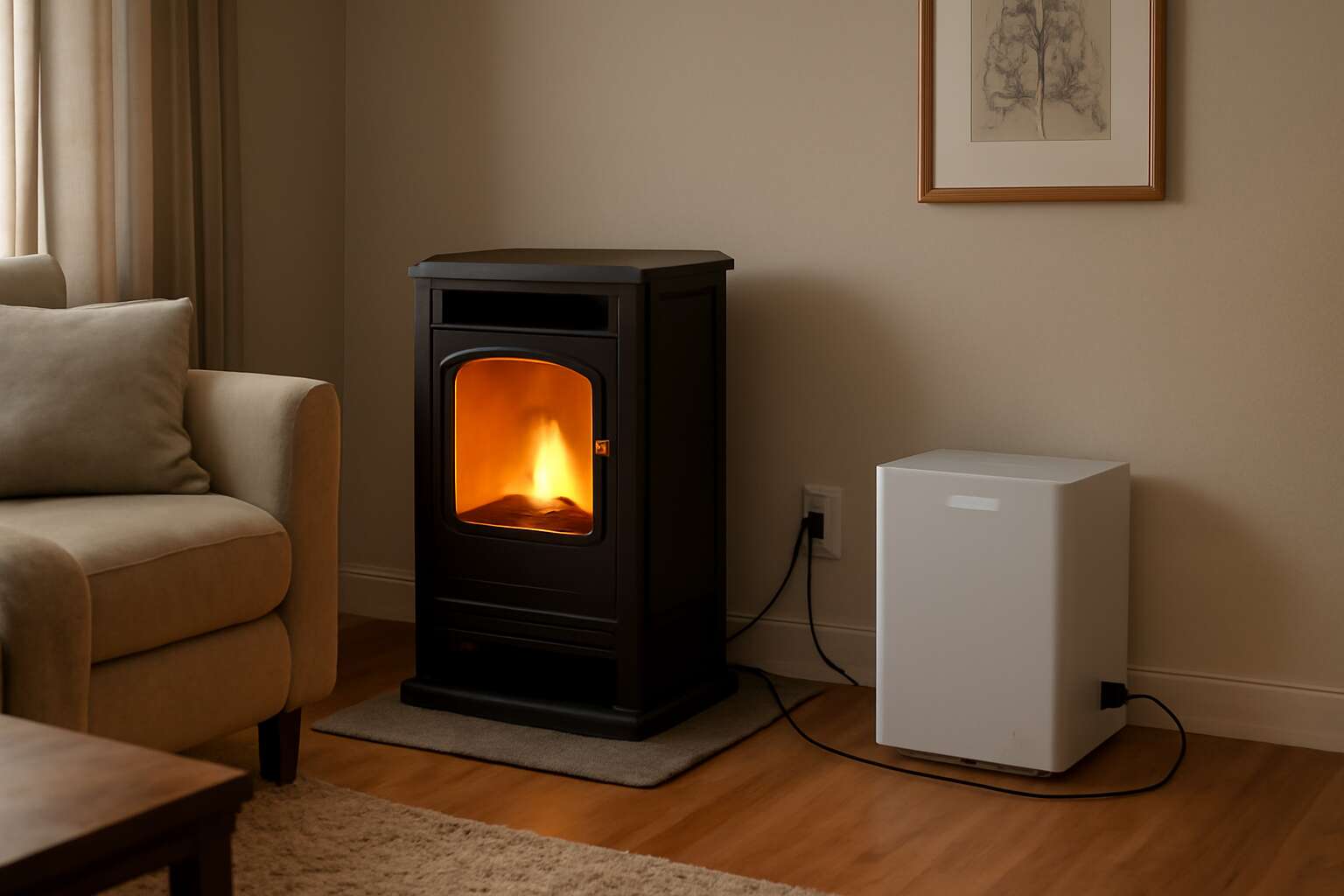
Understanding Backup Power for Pellet Stoves
Why Backup Power Matters for Pellet Heating
In South African homes, the stove is more than heat—it is a ritual shield against the cold. “Backup power isn’t a luxury; it’s a quiet promise,” a saying goes, and it sticks when the grid falters.
Understanding backup power means recognizing that pellet stoves rely on electricity to feed pellets, fans, and sensors. A battery backup for pellet stove can bridge outages, keeping flame and comfort alive, preserving warmth in the evenings and during outages typical in South Africa’s grid issues.
These unseen safeguards knit continuity into daily life:
- Uninterrupted warmth during outages
- Preserved routines and peace of mind
- Enhanced energy independence amid load shedding
When the lights flicker, I feel the promise endure: heat is a human issue, not merely a mechanical fact, and the quest for quiet reliability feels like a test of character as much as technology.
How Pellet Stoves Depend on Electrical Power
In South Africa, a pellet stove becomes a quiet fortress when the grid falters. “Warmth is more than heat; it is a ritual that outlasts the outage,” a sentiment I hear in candlelit kitchens where the glow keeps promises intact. I know how a single ember can steady a room and a family.
These stoves depend on electricity to feed pellets, drive the auger, spin the circulation fan, and power essential sensors. A battery backup for pellet stove would bridge outages, keeping flame and comfort alive as the evening deepens and the city outside sighs with load shedding.
- Auger motor delivering pellets to the burn chamber
- Convection fan distributing heat through the room
- Control board and sensors staying in sync with flame and safety
With power restored or not, the memory of that steady glow remains—a human-scale answer to the night’s challenges.
Common Power Outage Scenarios Affecting Heating
Across South Africa, outages shadow homes weekly, turning rooms into hushed sanctuaries after sunset. A pellet stove, quietly waiting, becomes a candlelit bastion against the dark and a reminder that warmth can outwait the outage.
When the grid blinks, warmth can still glow. A battery backup for pellet stove preserves the flame and ritual, letting the room breathe and the family settle into comfort as night deepens.
Common outage scenarios shape how backup power is used:
- Rolling blackouts and load shedding
- Voltage dips during storms
- Grid faults and transformer spikes
Even in the quiet, the glow remains a practical promise—a steady companion for South African homes as evening settles and the city sighs with load shedding.
Key Features to Look for in a Backup System
Outages have become part of daily life in many South African homes, yet warmth doesn’t have to vanish. A battery backup for pellet stove keeps the flame and ritual alive through the night.
Understanding the right setup starts with a few non-negotiables. Key features to look for provide predictable warmth and safety during longer outages.
- Capacity and run time (Ah and hours)
- Battery chemistry and cycle life
- Inverter type and true sine-wave output
- Automatic transfer switch and smart charging
- Safety features and maintenance needs
Choose a system that fits your stove’s power draw and space. The right battery backup for pellet stove balances cost with performance and quiet operation!
With the right pairing, the pellet stove becomes a steady companion for evenings when the city settles into load shedding.
Types of Backup Solutions for Pellet Stoves
Uninterruptible Power Supply Basics for Stoves
When the power flickers and frost sneaks in, a dependable battery backup for pellet stove becomes a lifeline. In rural South Africa, outages arrive with the dawn and linger into evening, but a warm hearth need not be a casualty of the grid.
Backup options cluster into three practical families. For lean setups, consider a Uninterruptible Power Supply (UPS) that keeps the stove’s control panel alive during a brief outage.
- UPS units designed for low-watt heating components and electronics
- Dedicated battery banks with a pure sine wave inverter for longer runtimes
- Hybrid arrangements combining solar charging, battery storage, and a backup generator
Uninterruptible Power Supply Basics for Stoves hinge on proper sizing and waveform. A UPS should offer enough runtime to bridge the outage and protect sensitive electronics, with features like surge protection and solar charging compatibility for extended resilience.
Battery Technologies: Lead-Acid vs Lithium-Ion vs Hybrid
In rural South Africa, outages stretch into evenings, and a reliable battery backup for pellet stove becomes a quiet guardian of warmth. Some regions report four hours of outages each day, turning a frost-bitten night into a test of resilience. An unseen dynamic fuels this shift—the grid’s instability sparking demand for dependable energy storage.
When it comes to battery technologies, three families stand out for pellet stoves:
- Lead-Acid: affordable, robust for short runtimes, and a dependable starter for lean setups.
- Lithium-Ion: higher energy density, longer life, and quicker recharge—better for longer outages.
- Hybrid: solar charging, storage, and a generator weave together to deliver continuous warmth.
Lead-Acid remains budget-friendly for basic needs, Lithium-Ion shines with performance, and Hybrid systems offer the broadest resilience—reflecting how South African homes balance space, budget, and night-long warmth.
Inverter and Charge Controller Options
Four hours of outages a day in rural South Africa have a quiet, telling burden on warmth! For pellet stoves, the best battery backup for pellet stove hinges on how you choose inverters and controllers—not just what you store.
Inverter options for pellet heating are as varied as escape routes in a storm:
- Pure sine wave inverters: clean power that keeps operation smooth and quiet.
- Modified sine wave inverters: cost-effective choices for lean setups.
- Hybrid or smart inverters: seamless shifts between solar, battery, and grid.
Charge controller options manage the energy flow with equal nuance:
- MPPT controllers: extract maximum energy from solar panels with sharper efficiency.
- PWM controllers: simple, dependable for modest loads.
- Integrated solar controllers: compact solutions that pair well with small stoves.
With the right blend, the daily grind of power instability becomes manageable—the kind of resilience that makes a home feel secure and warm, a true battery backup for pellet stove.
Hybrid Inverter Systems for Pellets
Across rural South Africa, outages arrive with the quiet inevitability of an evening chill. A well-designed battery backup for pellet stove keeps the room calm, the stove’s flames steady, and the family threaded through the blackout with warmth and dignity.
Hybrid Inverter Systems for Pellets sit at the heart of modern resilience. They blend solar, battery, and grid so the stove never misses a beat.
- Hybrid inverter systems that switch effortlessly between solar charging, battery discharge, and grid power
- Standalone inverter setups paired with UPS modules for clean sine-wave power
- Scalable battery banks with smart MPPT controllers for peak efficiency
These options shape how a home experiences warmth during long outages, ensuring the pellet stove remains a reliable anchor.
In the end, these hybrid and modular approaches translate power instability into steady, quiet warmth—a practical testament to a resilient home equipped with a battery backup for pellet stove.
Sizing and Selecting a Backup System for Pellet Stoves
Estimate Your Required Autonomy Hours
Power outages carve a line between ordinary evenings and chilly rooms. In South Africa, outages can stretch into the night, and a pellet stove’s warmth depends on more than fuel—it relies on a steadfast independent power reserve. “Power is the quiet backbone of warmth,” a seasoned installer likes to say, and sizing this reserve is where strategies meet comfort.
Estimate your autonomy hours by comparing the stove’s continuous draw to the usable energy stored. For a typical pellet stove, plan for a few kilowatt-hours rather than a single battery cycle. This is where choosing a battery backup for pellet stove becomes a design decision, not a guess. The following factors help frame the choice:
- Stove power draw (watts)
- Desired protected hours
- Battery usable capacity and depth of discharge
- Inverter efficiency and charging control
Calculate Total Power Draw and Required Capacity
Outages in South Africa don’t just dim the lights; they redraw the room’s temperature map. Sizing a battery backup for pellet stove becomes an act of design resilience rather than a mere gadget choice, marrying physics with comfort.
By accounting for the stove’s total power draw and the number of protected hours, that math translates into usable battery capacity, adjusted for depth of discharge and inverter efficiency. In my experience, even a few kilowatt-hours can outlast a winter evening when well selected.
- Stove power draw (watts)
- Desired protected hours
- Battery usable capacity and depth of discharge
- Inverter efficiency and charging control
The aim is to align the energy reserve with the stove’s warmth and the home’s electrical rhythm, a practical pathway for battery backup for pellet stove to keep rooms livable when mains fail.
Consider Efficiency, Inverter Losses, and Safety Margins
Sizing and selecting a backup system for pellet stoves is a poetic balance of physics and comfort. When you factor efficiency, inverter losses, and safety margins, you map a corridor of warmth that outlasts a long South African night. A thoughtful battery backup for pellet stove keeps rooms livable even as mains falter, turning a flicker into a steadfast glow!
- Efficiency: translate rated capacity into real usable energy for the stove
- Inverter losses: anticipate conversion and charging drain on runtime
- Safety margins: build extra reserve for cold snaps and extended outages
With a system that breathes with your home’s rhythm, I’ve seen outages fade from drama to mere inconvenience— a silent pact between warmth and resilience.
Budgeting: Cost of Batteries, Inverters, and Installation
Budgeting for a battery backup for pellet stove goes beyond sticker price; it’s about preserving coziness when aisles go dark. In South Africa, where rolling outages are part of the rhythm, planning costs in rand means weighing the value of uninterrupted warmth against long winter nights. The dialogue between upfront spend and future comfort shapes the choice.
- Battery options and usable depth of discharge, from lead-acid to lithium variants
- Inverter price, efficiency, and peak draw handling
- Installation, wiring, and warranty coverage with local suppliers
With those elements aligned, the sum becomes a calmer forecast—an investment that breathes with the home’s rhythm rather than breaking it. Local installers and suppliers in SA now offer packages that balance performance and budget, keeping the pellet stove a reliable hearth even when the mains falter.
Warranty and Support Considerations
Outages can stretch into hours, and warmth becomes a currency. Sizing a backup system isn’t guesswork; it’s a careful calibration of your pellet stove’s appetite against the mains’ reliability. When considering a battery backup for pellet stove, factor hours of autonomy, the stove’s peak power draw, and how weather patterns affect usage. A lean pack may save money but risk timeout during cold snaps; a larger bank adds resilience and steady comfort when the lights waver.
Warranty and support considerations are as critical as capacity. Look for clear terms on battery life, inverter coverage, and installation workmanship. To keep warmth guaranteed, verify service networks and response times with SA suppliers.
Key warranty and support considerations:
- Warranty duration and what it covers (battery, inverter, installation)
- Requirements for authorized installers to keep the warranty valid
- Local service networks and spare-parts availability in SA
Installation, Maintenance, and Safety for Pellet Stove Backups
Planning the Installation: Placement and Wiring
Outages are a chorus, and warmth is the encore. Planning the installation begins with thoughtful placement and clean wiring for a reliable battery backup for pellet stove. Position the unit in a dry, level spot near a circuit; keep cables tidy and accessible for service. A setup minimizes voltage drop and preserves heat when darkness falls.
Maintenance keeps the vigil in quiet hours. Regular inspection of connections, battery health, and corrosion checks helps the system endure. Schedule periodic professional checks and battery reviews; neglect invites drag on performance. A well-tended unit stays efficient, with clearances that prevent clutter from eroding safety margins.
Safety breathes through every detail. Use a surge protector and a proper inverter, keep a carbon monoxide detector nearby, and maintain ventilation around the stove. In a landscape of power fragility, the battery backup for pellet stove should be steadfast, compliant, and ready when the lights fail.
Battery Ventilation, Temperature Control, and Safety
Winter nights in South Africa test a home’s resolve. Outages arrive as uninvited guests, yet warmth can endure. ‘Heat is memory,’ say the stonemasons I work with, and a well-chosen battery backup keeps that memory bright. Installation should be tidy, accessible, and unintrusive.
Maintenance and safety keep the vigil alive. Regular checks of connections and battery health help the system endure. A quick professional review ensures the battery backup for pellet stove stays in step with the home’s steady pulse.
- Surge protection and a proper inverter
- Nearby carbon monoxide detectors
- Safe ventilation and stove clearance
Safety breathes through the design, especially around ventilation and temperature control. I seek a setup that respects heat and safety margins, with sturdy wiring, a trusted inverter, and alarms that stay quiet until needed.
Routine Maintenance and Battery Health Monitoring
On a crisp South African dawn, the pellet stove hums under the guardianship of the battery backup for pellet stove. Installation should be tidy, accessible, and unintrusive—an artisan weave of wires, space, and warmth. Place the inverter where it’s easy to check, invite surge protection to stand sentinel, and honor ventilation. A vow kept through outages!
Maintenance and battery health monitoring keep that vow alive. Regular checks of connections and state of charge, load tests, and a professional review ensure the system stays in step with the home’s rhythm. A battery endures longer, preserving heat with grace.
Safety threads through the design. Robust wiring, a trusted inverter, and alarms that stay until needed guard the night. CO detectors, safe ventilation, and stove clearance aren’t boxes ticked; they are guardians of memory, ensuring warmth returns with dignity after outages. That battery backup for pellet stove becomes a memory you can trust.
Troubleshooting Common Backup System Issues
“Heat isn’t a luxury; it’s a baseline,” a veteran installer likes to say. In South Africa, outages are part of winter’s forecast, and a stove becomes the steady heartbeat of a home when power falters.
Installation—this battery backup for pellet stove—should be tidy, accessible, and unintrusive—an artisan weave of wires, space, and warmth. Place the inverter where checks are easy, invite surge protection, and honor ventilation.
Maintenance and battery health monitoring keep that vow alive. Regular checks of connections and state of charge, plus periodic professional reviews, help the system stay in step with the home’s rhythm.
- Connections and charge status
- System load behavior
- Professional assessment and calibration
Safety threads through the design. Robust wiring, alarms that endure, CO detectors, safe ventilation, and stove clearance aren’t boxes ticked; they are guardians of warmth, ensuring the memory of heat returns after outages.

0 Comments