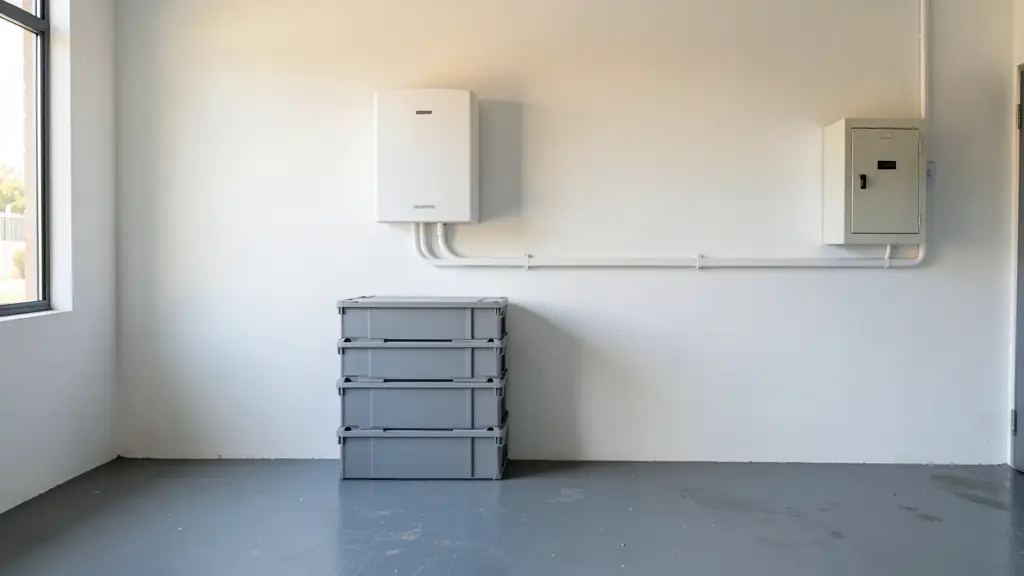
A battery backup system stores energy in a battery and hands it back as 230 V power when the supply drops. It can be as small as a router UPS that keeps the wifi up, or as big as a lithium bank that carries a whole house or shop through the night. This page explains the parts, the range of backup power options and how installers size a system from the things you need to keep running. Send one free, no-obligation request and local installers and suppliers quote you directly.
The parts of a backup power system
Most backup power solutions have the same four parts, whatever the size.
- Inverter: turns battery DC into 230 V AC. Its rating in kVA or kW is how much it can run at once.
- Battery: stores the energy. Its usable capacity in kWh decides how long the inverter can keep going. Lithium iron phosphate (LiFePO4) is the usual choice now; lead acid is cheaper upfront.
- Changeover: the inverter senses the outage and switches to battery, usually fast enough that lights and wifi do not drop.
- Essential circuit: a separate set of breakers in the DB board that carries only the loads you chose, so the geyser and stove stay off the battery.
From router UPS to whole home
Battery backup comes in steps, and the right step depends on what you need to keep alive. A small DC router UPS keeps the fibre box and router online for a few hours. A plug-in inverter trolley runs a TV, a lamp and a laptop with no wiring at all. A fixed home battery backup system wired into the DB board carries the lights, plug points, fridge, gate and alarm on an essential circuit. At the top, whole home systems with bigger inverters and banks of 10 kWh or more run almost everything, often with solar added. Businesses step up again to 3 phase backup power.
Sizing from a load list
A good installer starts with a list, not a product. Write down each thing that must keep running, its watts and the hours you want. Add up the watts that could run at the same time: that total sets the inverter size, with room for the surge a fridge or gate motor draws when it starts. Multiply each load by its hours and add them up: that is the energy the battery must hold. Rough runtime is usable battery kWh divided by the load in kW, less a margin for inverter losses. So 500 W of lights, wifi, TV and fridge on 5 kWh of usable battery gives about 10 hours on paper, and fewer in practice once losses and any reserve the battery keeps are taken off.
What drives the cost
The battery is usually the biggest line. Lithium costs more than lead acid upfront, but more of its capacity can be used and it is rated for more cycles, so compare cycle ratings and warranties in writing. Then come the inverter size, the labour and DB board changes, the CoC, surge protection and how far the kit sits from the board. Cost guides put an installed home backup at about R25,000 for a small lead acid setup, about R65,000 to R95,000 for a mid-size lithium system and R150,000 or more for whole home backup. Ask each quote to list the parts so you can compare like with like.
What to include in your request
- List what must keep running and its watts
- Say how many hours of backup you want
- Say where the inverter and battery could go
- Mention if solar may be added later
- Ask for parts, labour and CoC listed separately
Battery Backup Systems for different clients
- Homeowners: lights, wifi, TV, fridge, gate and alarm on an essential circuit through outages
- Complexes, estates and body corporates: gate motors, booms, the guard hut and common lights kept running for the body corporate
- Offices and home offices: computers, network, phones and the server cabinet kept up so work carries on
- Shops, restaurants and salons: tills, card machines, lights and fridges kept on so trading does not stop
- Farms and smallholdings: farmhouse essentials, the electric fence and a small borehole pump through long rural outages
- Clinics, surgeries and care homes: consulting room lights, computers, medicine fridges and home medical devices kept powered
- Factories, warehouses, schools and churches: control circuits, offices, alarms and data rooms carried while plant waits for the grid
- Electricians, installers and security companies: electricians and installers sourcing inverters, batteries and parts for client backup systems
Frequently asked questions
What is a battery backup system?
How long will a battery backup last during an outage?
Do I need an electrician for battery backup near me?
Do you install backup systems yourselves?
Battery Backup Systems by province and city
- Johannesburg
- Pretoria
- Centurion
- Midrand
- Sandton
- Randburg
- Roodepoort
- Krugersdorp
- Randfontein
- Germiston
- Boksburg
- Benoni
- Kempton Park
- Alberton
- Vanderbijlpark
- Vereeniging
- Durban
- Pinetown
- Pietermaritzburg
- Richards Bay
- Newcastle
- Ladysmith
- Gqeberha (Port Elizabeth)
- East London
- Kariega (Uitenhage)
- Mthatha
- Cape Town
- Bellville
- Paarl
- Stellenbosch
- George
- Worcester
- eMalahleni (Witbank)
- Middelburg
- Secunda
- Mbombela (Nelspruit)
- Rustenburg
- Brits
- Klerksdorp
- Potchefstroom
- Mahikeng
- Polokwane
- Tzaneen
- Kimberley
- Upington
- Bloemfontein
- Welkom
- Sasolburg