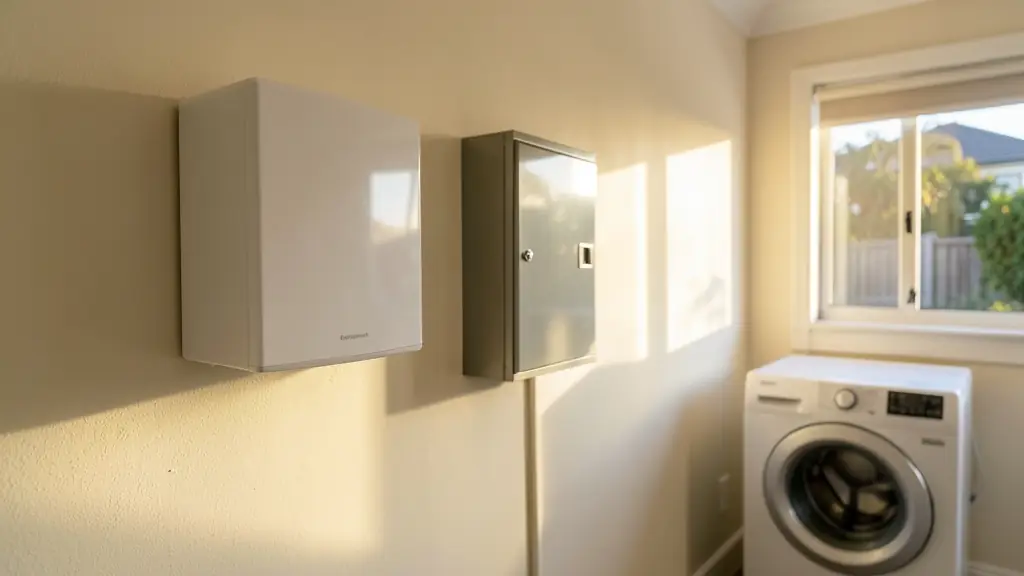
Home battery backup keeps the parts of a house that matter running when the power goes: lights, wifi, the TV, the fridge, the gate and the alarm. Load shedding has eased, but storms, cable theft and substation faults still leave streets dark for hours. This page covers what to put on backup power for home and what to leave off, how many hours to plan for, where the inverter and battery should live, and the paperwork. Send one free, no-obligation request and local installers quote you directly.
What to back up and what to leave off
Backup power for home works best when it carries the essentials and nothing else. Most households put these on the essential circuit:
- lights in the main rooms and outside security lights
- wifi, the fibre box and a few plug points for laptops and phones
- the TV and decoder
- the fridge and freezer
- the gate motor, garage door and alarm
Geysers, stoves, ovens, kettles, heaters, aircons, tumble dryers and pool pumps draw too much and are usually left on the grid. A gas hob and a geyser timer cover the gaps. Whole house battery backup that runs almost everything needs a much bigger inverter and battery, at a much higher price.
How many hours do you need?
Plan for your longest likely outage, not the average. An overnight outage on essentials of about 300 to 500 W needs far more stored energy than a two-hour gap in the afternoon. A 5 kVA inverter with a 5 kWh lithium battery is a common starting point for a family home; a second battery roughly doubles the hours without changing the inverter. If outages in your area tend to be long, a 10 kWh bank, or solar to recharge it during the day, helps. The battery backup systems guide explains the sizing sums.
Where the kit goes in the house
Inverters hum and their fans run under load, so a bedroom wall is a poor choice. A garage, scullery or store room close to the DB board is usual. Batteries like a cool, dry, ventilated spot out of direct sun: a west-facing garage wall in summer gets hot, and some lithium batteries will not charge below about 0 °C on a cold Highveld morning. Battery theft happens, so keep the bank locked inside rather than in an outside cupboard. Leave space around the inverter for air and for an electrician to work.
CoC, insurance and adding solar later
A home system wired into the DB board must be installed by a registered electrician, who issues a Certificate of Compliance. Keep it: insurers may ask for it after a fire or a claim. Many municipalities ask owners to register inverters connected to the supply, so check with your municipality. If solar is on the wish list, ask for a hybrid inverter now so panels can be added later without changing the inverter. Cost guides put a 5 kVA inverter with a 5 kWh lithium battery at about R65,000 to R95,000 installed, depending on the area and the equipment.
What to include in your request
- List the rooms and appliances to keep on
- Say how long outages usually last
- Say where the kit could be mounted
- Send a photo of the DB board
- Say if solar may be added later
Home Battery Backup for different clients
- Homeowners: lights, wifi, TV, fridge, gate and alarm kept on through evening and overnight outages
- Complexes, estates and body corporates: a townhouse backup sized for one unit, with the body corporate approving the mounting spot
- Offices and home offices: a home office kept online with laptop, screen, router and phone charging on backup
- Shops, restaurants and salons: a flat above a shop with its essentials backed up separately from the trading floor
- Farms and smallholdings: the farmhouse lights, fridge, wifi and electric fence kept on through long rural outages
- Clinics, surgeries and care homes: home medical devices such as CPAP machines and oxygen concentrators kept powered at night
- Factories, warehouses, schools and churches: staff housing and caretaker cottages on factory or school grounds given their own backup
- Electricians, installers and security companies: installers quoting standard home packages for suburbs with frequent outages and cable theft
Frequently asked questions
What size home battery backup do I need?
Can home backup power run my geyser?
Is a home backup system noisy?
How do I get quotes for backup power at home?
Home Battery Backup by province and city
- Johannesburg
- Pretoria
- Centurion
- Midrand
- Sandton
- Randburg
- Roodepoort
- Krugersdorp
- Randfontein
- Germiston
- Boksburg
- Benoni
- Kempton Park
- Alberton
- Vanderbijlpark
- Vereeniging
- Durban
- Pinetown
- Pietermaritzburg
- Richards Bay
- Newcastle
- Ladysmith
- Gqeberha (Port Elizabeth)
- East London
- Kariega (Uitenhage)
- Mthatha
- Cape Town
- Bellville
- Paarl
- Stellenbosch
- George
- Worcester
- eMalahleni (Witbank)
- Middelburg
- Secunda
- Mbombela (Nelspruit)
- Rustenburg
- Brits
- Klerksdorp
- Potchefstroom
- Mahikeng
- Polokwane
- Tzaneen
- Kimberley
- Upington
- Bloemfontein
- Welkom
- Sasolburg