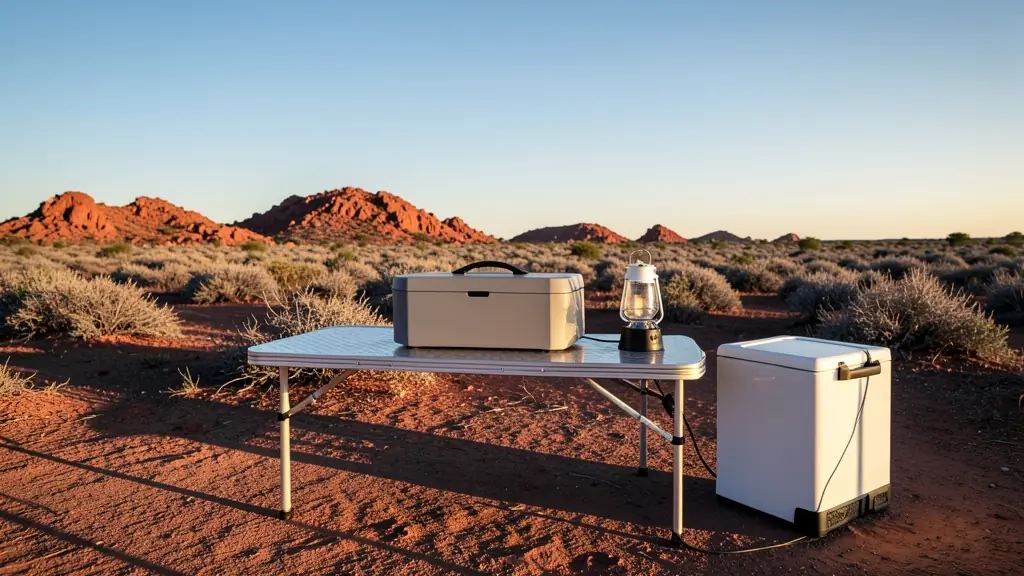
A portable power station is a battery, an inverter and a charger in one box with a carry handle, plug points on the front and nothing to wire in. Charge it from the wall, a car or solar panels, then run lights, wifi, laptops, a TV or a small fridge from it during an outage or at a campsite. This page explains Wh and watts, battery chemistry, real runtimes, charging and the sizes on sale in South Africa. Tell us what you want to run and local suppliers will send free quotes, with no obligation.
Wh, watts and surge: the three numbers
Three figures on the spec sheet matter. Capacity in Wh is how much energy is stored, which decides how long it runs. AC output in W is how much it can run at once. Surge is the short burst it can give when a motor starts, such as a fridge compressor.
Rough runtime is the Wh divided by the load in watts, less a margin for inverter losses. A 1 kWh station running a 100 W load of lights, wifi and a TV lasts somewhere around 8 to 9 hours, not the full 10. The same station on a 50 W laptop and router runs most of a day. Anything with a heating element, such as a kettle, geyser, stove or hairdryer, empties it in minutes or will not start at all.
LiFePO4 or NMC
Most stations now use lithium iron phosphate (LiFePO4). It is heavier for the same Wh but is the more stable chemistry and usually carries a higher cycle rating, which suits daily use through outages. Lighter models use NMC lithium, which packs more energy into less weight and suits hikers and occasional camping. Compare the maker's cycle rating and warranty in writing rather than trusting a sticker. Keep the station out of a hot car and direct sun, and note that some will not charge below about 0 °C on a frosty Highveld morning.
Sizes and what they suit
- About 300 Wh: router, phones, LED lights and a laptop for an evening; light enough to carry anywhere.
- About 500 to 700 Wh: a TV and decoder, wifi and lights for a few hours, or a 12 V camping fridge overnight.
- About 1 kWh: the mid size for home backup; a full outage evening, a CPAP machine overnight where its maker allows it, or a weekend away.
- 2 kWh and up: a household fridge, lights and wifi for longer, often with add-on expansion batteries.
Charging, solar input and home use
Wall charging is the norm, and fast charging models refill in a few hours. A car socket charges slowly and suits topping up on the road. Most stations take solar panels through a built-in MPPT input, which turns them into a solar generator. Some have a pass-through mode that acts like a basic UPS; ask how fast it switches. At home, keep it on charge and plug the essentials straight into it. Never connect it into the house wiring or back-feed a plug point. If you want automatic switchover for a desk, a UPS or an inverter trolley may suit better.
What to include in your request
- What you want to run, with watts
- Hours of runtime you need
- Home backup, camping or both
- LiFePO4, or the lightest unit possible
- Whether you want solar panels with it
Portable Power Stations for different clients
- Homeowners: a power station in the lounge running wifi, lights, the TV and phone chargers
- Complexes, estates and body corporates: a power station at the guard hut for the radio, lights and the intercom
- Offices and home offices: a power station per desk so laptops, screens and the router keep running
- Shops, restaurants and salons: a station behind the counter running the card machine, till, router and lights
- Farms and smallholdings: a station for the farmhouse, the bakkie or a remote camp without mains power
- Clinics, surgeries and care homes: a station for a home CPAP or other medical device where its maker permits it
- Factories, warehouses, schools and churches: stations for site offices, film shoots, outdoor events and maintenance teams in the field
- Electricians, installers and security companies: stockists and installers buying power stations, panels and cables for resale
Frequently asked questions
Can a portable power station run a fridge?
What size portable power station do I need?
How much is a portable power station in South Africa?
Do you stock power stations for sale?
Portable Power Stations by province and city
- Johannesburg
- Pretoria
- Centurion
- Midrand
- Sandton
- Randburg
- Roodepoort
- Krugersdorp
- Randfontein
- Germiston
- Boksburg
- Benoni
- Kempton Park
- Alberton
- Vanderbijlpark
- Vereeniging
- Durban
- Pinetown
- Pietermaritzburg
- Richards Bay
- Newcastle
- Ladysmith
- Gqeberha (Port Elizabeth)
- East London
- Kariega (Uitenhage)
- Mthatha
- Cape Town
- Bellville
- Paarl
- Stellenbosch
- George
- Worcester
- eMalahleni (Witbank)
- Middelburg
- Secunda
- Mbombela (Nelspruit)
- Rustenburg
- Brits
- Klerksdorp
- Potchefstroom
- Mahikeng
- Polokwane
- Tzaneen
- Kimberley
- Upington
- Bloemfontein
- Welkom
- Sasolburg