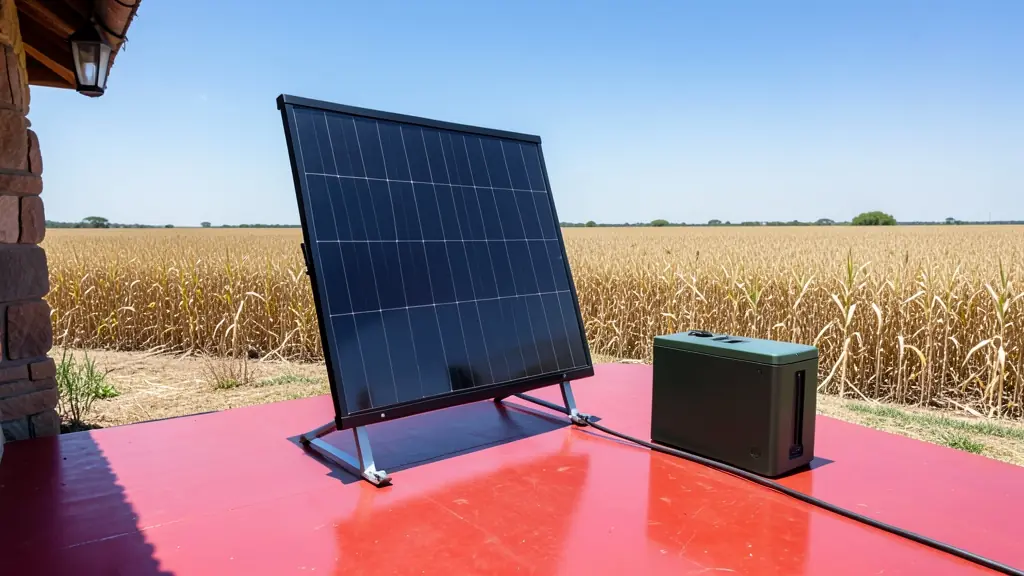
A solar generator is not a generator in the usual sense. It is a portable power station paired with one or more folding solar panels, so it can recharge without the mains or any fuel. It is quiet, has no exhaust and suits camping, farm outbuildings and long outages. This page covers panel watts, how long a charge takes in South African sun, what cloudy days do, cables and input limits, and an honest picture of what a kit can run. Send one request and local suppliers will quote you for free, with no obligation.
Panel watts and charge time
A folding panel's rating, such as 100 W or 200 W, is what it gives in ideal test conditions. In real use, with heat, dust and the angle of the sun, expect noticeably less, even on a clear Karoo or Highveld day. For a rough guide, take the panel watts, allow a fair margin for losses and multiply by the hours of strong sun, which is mostly the middle of the day.
So a 200 W panel facing the sun for about five good hours puts in well under the 1 kWh the sum suggests. That can nearly refill a 500 Wh station, but a 2 kWh station needs more panels or several days. The station's own solar input limit also caps how fast it can charge.
Cloudy days, winter and placement
Panels still work under cloud, but output drops sharply, and a run of grey days in a Cape winter or a stormy week on the Highveld can leave the station half charged. Winter sun is lower and the days shorter, so charge times stretch. To get the most out of a panel:
- Face it north and tilt it towards the sun, and turn it as the sun moves.
- Keep it clear of shade: even a branch across one corner cuts the output a lot.
- Keep the station itself in the shade, as heat slows charging.
- Wipe off dust, especially after a drive on dirt roads.
Cables, connectors and input limits
Every station has a maximum solar input in watts and a voltage range. Panel watts above that limit are wasted, and panels wired in series above the voltage limit can damage the input. Check the connector too: many panels use solar plugs that need an adapter cable to the station's input. Long, thin extension leads lose power, so keep the run short. If you already own a station, give the supplier its solar input specs so the panel matches. For panels on a roof feeding a full home system, see hybrid inverters instead.
What a solar generator can and cannot run
A kit suits lights, phones, laptops, a router, a 12 V camping fridge, fans, small tools and a CPAP where its maker allows it. It will not run a geyser, stove, kettle, aircon or borehole pump in any practical way. It fits a weekend cabin, a farm workshop light and radio, a market stall, or a quiet outage backup that needs no petrol. For more on the station itself see portable power stations, and for running gear off a vehicle battery see power inverters.
What to include in your request
- What you want to run, with watts
- Where it will be used: home, camp or farm
- Panel watts you have in mind
- If you own a station, its solar input specs
- How many days off the mains you want to cover
Solar Generators for different clients
- Homeowners: a kit for lights, wifi and phones that recharges on the stoep during long outages
- Complexes, estates and body corporates: a kit charging beside the guard hut for the radio, lights and the intercom
- Offices and home offices: a kit for a small office or home office to keep laptops and wifi going
- Shops, restaurants and salons: a kit for market stalls, food trucks and pop-up shops with no plug point nearby
- Farms and smallholdings: a kit for a remote farm workshop, outbuilding lights or a hunting camp
- Clinics, surgeries and care homes: a quiet kit for a home CPAP or mobile clinic lights where the maker allows it
- Factories, warehouses, schools and churches: kits for site offices, survey camps and outdoor events away from the grid
- Electricians, installers and security companies: suppliers and installers buying panels, stations and cables for resale to clients
Frequently asked questions
How long does a solar generator take to charge?
What is the price of a solar generator in South Africa?
Can a solar generator power my house?
How do quotes work through this site?
Solar Generators by province and city
- Johannesburg
- Pretoria
- Centurion
- Midrand
- Sandton
- Randburg
- Roodepoort
- Krugersdorp
- Randfontein
- Germiston
- Boksburg
- Benoni
- Kempton Park
- Alberton
- Vanderbijlpark
- Vereeniging
- Durban
- Pinetown
- Pietermaritzburg
- Richards Bay
- Newcastle
- Ladysmith
- Gqeberha (Port Elizabeth)
- East London
- Kariega (Uitenhage)
- Mthatha
- Cape Town
- Bellville
- Paarl
- Stellenbosch
- George
- Worcester
- eMalahleni (Witbank)
- Middelburg
- Secunda
- Mbombela (Nelspruit)
- Rustenburg
- Brits
- Klerksdorp
- Potchefstroom
- Mahikeng
- Polokwane
- Tzaneen
- Kimberley
- Upington
- Bloemfontein
- Welkom
- Sasolburg